
Introduction
Disabled students face unique challenges in education, from navigating campus life to accessing learning materials. Assistive technology (AT) provides tools to overcome these barriers, offering independence and academic support. This 2026 guide explains the best assistive technology options, available grants, and step-by-step guidance for disabled students in the UK.
What Is Assistive Technology for Disabled Students?
Assistive technology refers to devices, software, or equipment that helps students with disabilities learn, communicate, and participate fully in academic life. It bridges the gap between students’ needs and standard learning environments.
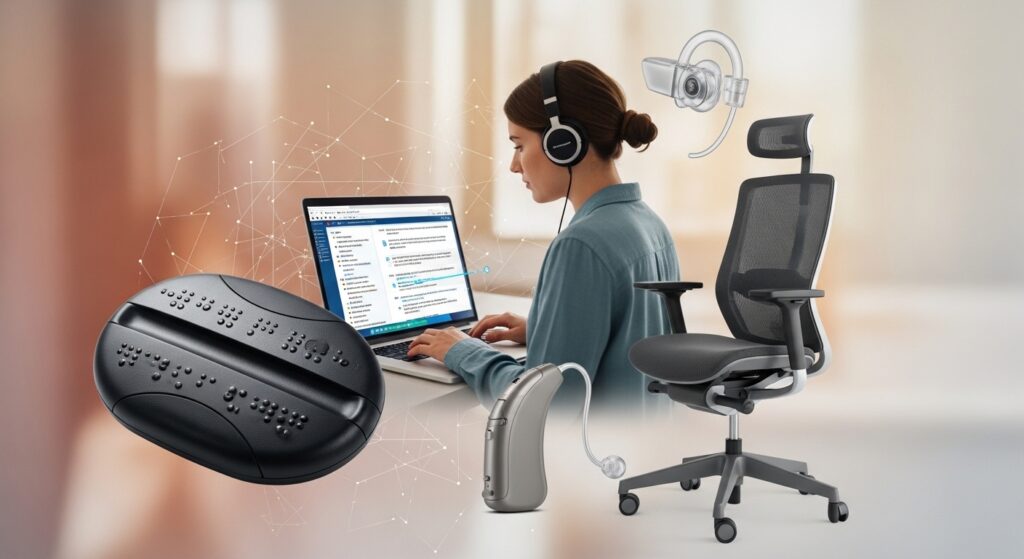
Common types of assistive technology include:
- Speech-to-text and text-to-speech software
- Screen readers for visually impaired students
- Hearing aids and amplified audio devices
- Ergonomic keyboards, adapted mice, and alternative input devices
- Note-taking apps and study organisers
- Braille devices and tactile learning tools
These technologies help students complete coursework, attend lectures, and take exams independently.
Types of Assistive Technology Tools
1. Software Tools
- Speech-to-Text Software: Converts spoken words into typed text, ideal for students with dyslexia or motor impairments.
- Text-to-Speech Software: Reads digital text aloud for visually impaired students or those with learning difficulties.
- Mind-Mapping Apps: Organise essays and projects efficiently.
- Screen Readers: Provide access to documents, websites, and online courses for visually impaired students.
2. Hardware Devices
- Adaptive Keyboards & Mice: Reduce strain for students with physical disabilities.
- Braille Notetakers: Convert digital text into braille for visually impaired learners.
- Hearing Aids & FM Systems: Improve lecture and group discussion comprehension.
- Ergonomic Chairs & Desks: Ensure comfort during long study sessions.
3. Mobile and Tablet Apps
- Note-Taking Apps: Apps like OneNote and Notability support audio recording and digital organisation.
- Reading Assistance Apps: Highlight, translate, or read text aloud.
- Reminder and Task Management Apps: Help manage deadlines and schedules efficiently.
Grants and Financial Support for Assistive Technology
Students in the UK can access financial support to cover AT costs through multiple schemes:
1. Disabled Students’ Allowance (DSA)
- Eligibility: UK students with a disability, mental health condition, or specific learning difficulty.
- Coverage: AT tools, ergonomic furniture, and specialist study support.
- Application Process:
- Provide medical evidence of disability.
- Contact your university’s disability service.
- Arrange a Needs Assessment for required AT.
- Submit a DSA application to Student Finance England (or Scotland, Wales, Northern Ireland).
2. University-Specific Support
Many universities provide additional support for AT:
- Laptop loans
- Software licences
- Accessible course materials
Check your university’s disability services page for details.
3. Charitable Organisations
- AbilityNet and Leonard Cheshire offer grants or free guidance for AT.
- Some student unions maintain funds for disability support.
Choosing the Right Assistive Technology
- Identify Needs: Focus on tasks that present the biggest challenges.
- Consult Disability Services: Universities provide guidance and trial access.
- Check Compatibility: Ensure tools work with university systems.
- Training: Request training for new software or devices.
- Budget Wisely: Use grants to prioritise essential tools first.
Common Mistakes to Avoid
- Purchasing technology without assessment
- Choosing incompatible software
- Ignoring updates or accessibility settings
- Not applying for available grants

FAQ Schema Ready Text
Q1: What assistive technology is covered by DSA?
A1: DSA covers software like speech-to-text, screen readers, ergonomic furniture, and specialist study support.
Q2: Can part-time students get assistive technology?
A2: Yes, part-time students may qualify for DSA based on study hours.
Q3: How much does assistive technology cost in the UK?
A3: Costs range from £50 for basic software to £2,000+ for hardware like braille devices. Grants usually cover essential tools.
Q4: Are free assistive technology options available?
A4: Some apps and software have free versions. Universities often provide free licences for students.
Q5: Is proof of disability needed for assistive technology grants?
A5: Yes, official medical evidence or assessment is required for funding.
Conclusion
Assistive technology empowers disabled students in the UK to study independently and participate fully in academic life. By understanding the available tools, grants, and practical guidance, students can maximise their learning potential and navigate university life with confidence.
AT and support schemes like DSA make education more accessible, helping students achieve their goals in 2026 and beyond.
Disclaimer:
This article is for informational purposes only and does not constitute legal, medical, or financial advice. Always consult official UK sources or a qualified professional for guidance on assistive technology and funding.