
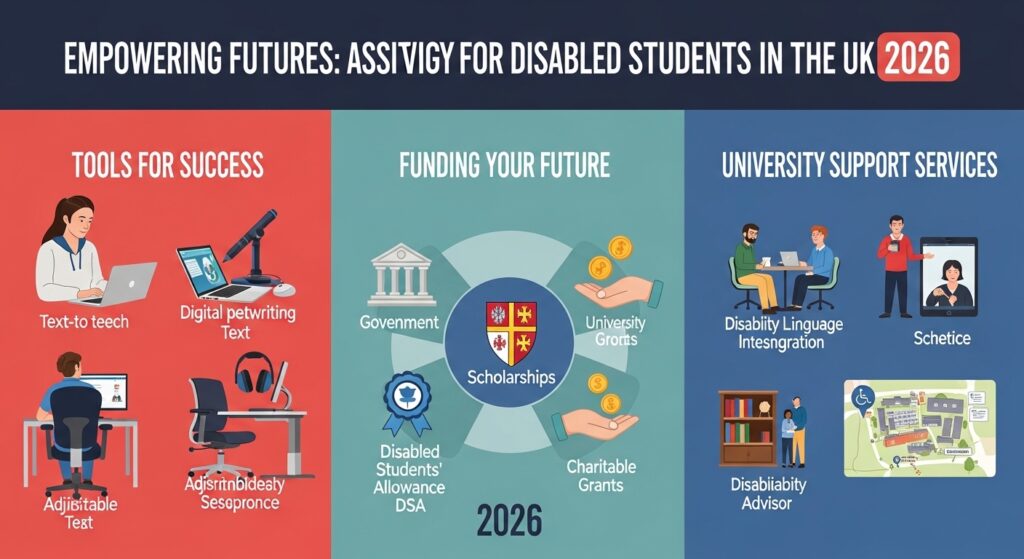
Assistive technology is revolutionising education for disabled students in the UK. From dyslexia software to hearing aids, these tools help students access learning, participate fully in classes, and achieve academic success.
In 2026, universities and colleges across the UK are increasingly supporting disabled learners with assistive technology, financial grants, and dedicated services. This guide explains the best tools, funding options, and how to access support.
What Is Assistive Technology?
Assistive technology (AT) refers to tools, devices, and software designed to support people with disabilities in daily tasks and education. In schools and universities, AT helps disabled students:
- Read and write effectively
- Communicate with teachers and peers
- Take notes and manage assignments
- Access online learning platforms
Common AT includes:
- Screen readers
- Voice recognition software
- Hearing aids
- Adaptive keyboards
- Braille displays
Types of Assistive Technology for Students
1. Reading and Writing Support
Students with dyslexia, visual impairments, or learning difficulties often benefit from reading and writing software. Examples include:
- Text-to-speech programs
- Spell checkers and grammar tools
- Digital note-taking apps
Popular tools in the UK include Kurzweil 3000, Read&Write, and ClaroRead.
2. Communication Devices
Students with speech impairments or limited verbal abilities can use:
- Speech-generating devices
- Tablet-based communication apps
- Augmentative and Alternative Communication (AAC) tools
These technologies help students participate in group discussions and presentations.
3. Hearing Assistance
Hearing aids and assistive listening devices are essential for students with hearing loss. Options include:
- Personal FM systems
- Induction loop systems in lecture halls
- Noise-cancelling headphones for concentration
Many UK universities provide these through their accessibility services.
4. Mobility Assistance
Wheelchairs, scooters, and adaptive seating help students with mobility issues move around campus safely and comfortably. Some universities provide:
- On-campus accessible transportation
- Adjustable desks and lecture seating
- Elevators and ramps
5. Software for Organization and Study
Students with ADHD, memory issues, or executive function challenges can use apps to manage:
- Timetables and assignments
- Reminders and notifications
- Digital calendars and task managers
Popular apps include Todoist, Microsoft OneNote, and Evernote.
Grants and Funding Options in 2026
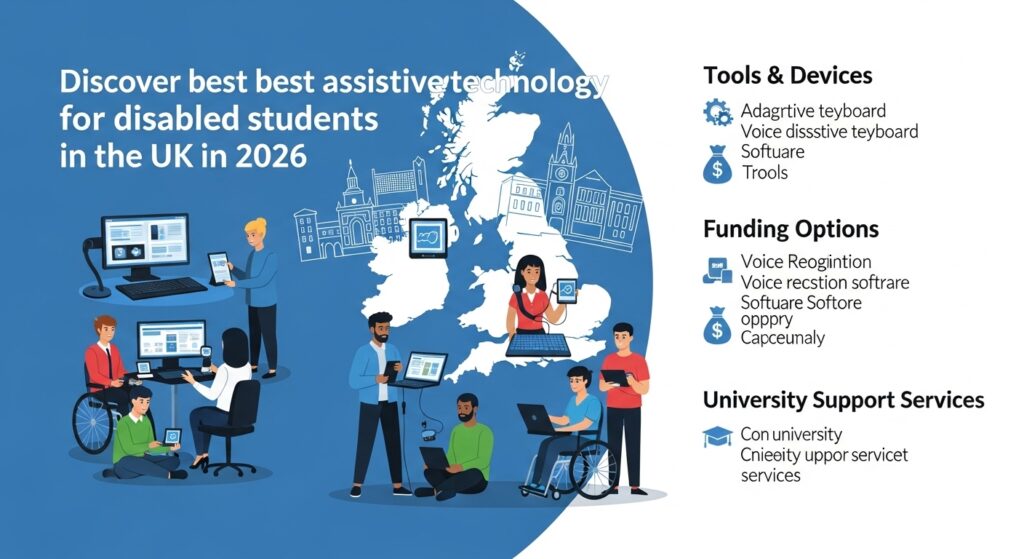
Disabled students in the UK can apply for financial support to purchase assistive technology or pay for related services. Main funding options include:
1. Disabled Students’ Allowance (DSA)
DSA is a government-funded grant for eligible students in higher education. It covers:
- Assistive technology software and devices
- Specialist tutors
- Note-taking services
- Additional travel costs
Students must provide evidence of a disability and an assessment report.
2. University-Specific Bursaries
Some UK universities offer bursaries or funding for students with disabilities. Examples include:
- University of Manchester Accessibility Bursary
- King’s College London Disabled Student Fund
These bursaries may cover technology, study materials, and additional support services.
3. Charity Support
Charities often fund assistive technology for students with specific needs, such as:
- RNIB (Royal National Institute of Blind People) – visual impairment support
- Scope – general disability support
- Mind – mental health support
Charity grants may cover devices, software licenses, and specialised tutoring.
How to Access Assistive Technology at UK Universities
Step 1: Register with the Disability Support Service
Most universities have a dedicated Disability and Accessibility Service. Students should register early to access assessments and support.
Step 2: Obtain an Assessment
An educational or occupational therapist may assess your needs and recommend appropriate AT.
Step 3: Submit Funding Applications
Apply for DSA or bursaries using your assessment report. Ensure all deadlines are met to secure funding before the academic year begins.
Step 4: Receive Equipment and Support
Universities and funding bodies provide AT devices, software, or tutors. Training is often included to ensure effective usage.
Benefits of Assistive Technology in Education
- Increased Independence – Students can complete tasks without constant support.
- Improved Academic Performance – Tools like note-taking software help with comprehension and retention.
- Enhanced Communication – AAC devices and speech software enable participation in group discussions.
- Greater Confidence – Students feel included and empowered in classroom environments.
Challenges and Considerations
While assistive technology offers many benefits, students should consider:
- Compatibility with university systems and software
- Costs if funding is not fully available
- Regular maintenance and software updates
- Training and learning curve for complex devices
Top Assistive Technology Tools in the UK (2026)
| Tool | Purpose | Notes |
|---|---|---|
| Kurzweil 3000 | Text-to-speech & reading | Supports dyslexia & learning difficulties |
| Read&Write | Writing assistance | Spell check, word prediction, and audio support |
| ClaroRead | Reading & writing | Integrates with Microsoft Office |
| Dragon NaturallySpeaking | Voice recognition | Converts speech to text |
| FM Hearing Systems | Hearing aid support | Useful in lecture halls |
Future Trends in Assistive Technology
- AI-powered learning tools for personalised support
- Virtual reality for immersive learning experiences
- Improved portability and battery life for devices
- Increased integration with online learning platforms
These innovations aim to make education more inclusive for disabled students across the UK.
Final Thoughts
Assistive technology is essential for ensuring that disabled students can thrive in UK higher education. With the right devices, software, and funding support, students can access learning equally and gain independence.
By 2026, UK universities are increasingly committed to creating inclusive environments. Disabled students who understand available technology and funding options can maximise their learning potential.