
Attendance Allowance is a UK benefit designed to help older people who need support because of illness or disability.
Many families don’t realise they qualify. Others assume it’s only for people in care homes. In reality, thousands of pensioners living at home are eligible but never apply.
This guide explains who qualifies, how much you can receive, how to apply, and the common mistakes that lead to rejection.
What Is Attendance Allowance?
Attendance Allowance is a tax-free benefit for people over State Pension age who need help with personal care due to a physical or mental condition.
It is paid by the Department for Work and Pensions (DWP).
It is not means-tested.
That means your income and savings do not affect eligibility.
You do not need to have a carer to qualify.
Who Can Claim Attendance Allowance?
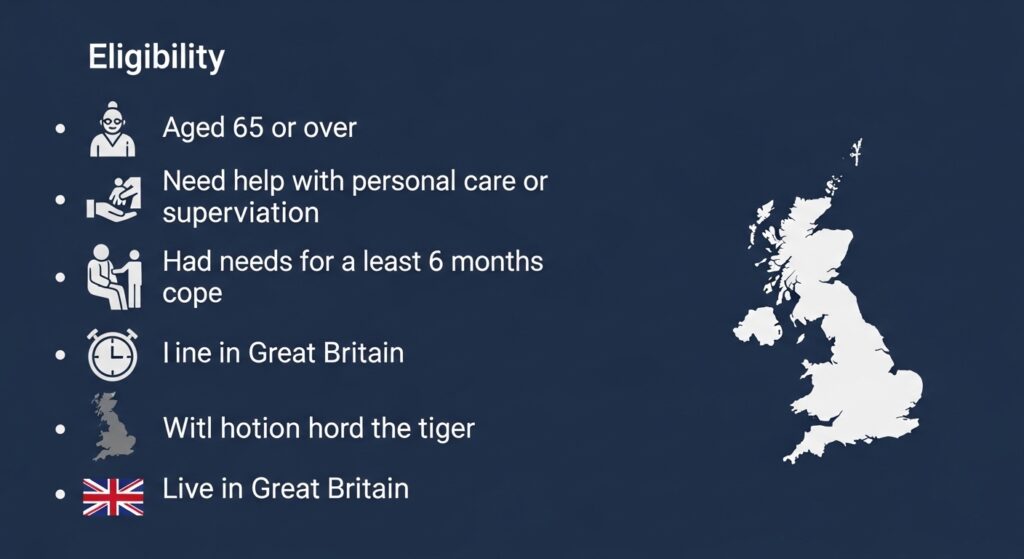
To qualify, you must:
- Be over State Pension age
- Have a physical disability, mental health condition, or long-term illness
- Need help with personal care or supervision
- Have needed support for at least 6 months (unless terminally ill)
- Be in Great Britain when claiming
You do not need a formal diagnosis to apply, but you must show that your condition affects your daily living.
What Does “Need Help” Mean?
Attendance Allowance is about care needs, not mobility.
It focuses on help with:
- Washing and bathing
- Dressing
- Using the toilet
- Eating
- Taking medication
- Staying safe due to confusion or memory problems
You may qualify even if you do not currently receive help, as long as you need it.
For example:
An elderly person who struggles to get in and out of the bath safely may qualify, even if they live alone and manage without assistance.
How Much Is Attendance Allowance?
There are two rates.
Lower Rate
Paid if you need help during the day OR during the night.
Higher Rate
Paid if you need help during both day AND night, or if you are terminally ill.
Rates are reviewed annually, so always check official figures before publishing exact payment amounts.
Payments are usually made every four weeks.
Conditions That Commonly Qualify
Attendance Allowance is not condition-specific, but common qualifying conditions include:
- Dementia
- Parkinson’s disease
- Severe arthritis
- Stroke after-effects
- Heart failure
- COPD
- Visual impairment
- Severe frailty
What matters is how the condition affects daily care needs.
Attendance Allowance and Dementia
Many families claim Attendance Allowance when a parent develops dementia.
If someone:
- Needs supervision to prevent wandering
- Forgets to eat
- Needs prompting to wash
- Cannot manage medication safely
They may qualify.
Night-time supervision due to confusion or risk of falls can support a higher-rate award.
How to Apply for Attendance Allowance
You must complete a paper claim form.
You can:
- Download the form from GOV.UK
- Request it by phone from the Attendance Allowance helpline
The form is detailed and requires clear explanations of daily difficulties.
How to Fill the Form Properly
This is where many claims fail.
Avoid vague answers like:
“She struggles sometimes.”
Instead explain:
“She cannot get in and out of the bath without assistance due to severe hip pain and balance issues. She is at risk of falling and has previously slipped.”
Be specific about:
- What help is needed
- How often
- What happens without help
- Risks involved
- Night-time needs
If possible, include:
- GP letters
- Consultant reports
- Hospital discharge summaries
Terminal Illness Claims
If someone has a terminal diagnosis, they can apply under special rules.
In these cases:
- The 6-month qualifying period does not apply
- The higher rate is usually awarded
- The process is fast-tracked
Medical confirmation is required.
Can You Claim Attendance Allowance in a Care Home?
If you pay your own care home fees, you can usually still receive Attendance Allowance.
If the local council funds your care home placement, payment may stop.
Always check individual circumstances.
Does Attendance Allowance Affect Other Benefits?
Attendance Allowance can increase eligibility for:
- Pension Credit
- Housing Benefit
- Council Tax Reduction
It can also allow someone caring for you to claim Carer’s Allowance, if eligible.
This is important for families who provide unpaid care.
How Long Does It Take?
Processing times vary but often take 6–8 weeks.
If approved, payments are backdated to the date the claim was received.
If refused, you can request a Mandatory Reconsideration.
Why Claims Are Rejected
Common reasons include:
- Underestimating care needs
- Not explaining night-time supervision
- Failing to describe safety risks
- Incomplete sections
- Lack of supporting evidence
Be honest but thorough.
Real Example Scenario
Mrs Ahmed, aged 78, lives alone. She has severe arthritis and early-stage dementia.
She:
- Cannot safely bathe without help
- Forgets to take medication
- Needs prompting to eat
- Wakes at night confused
Even though she lives alone and manages most days, she still qualifies because she needs care and supervision.
Common Myths
Myth: You must have a carer.
Reality: You only need to show that you require help.
Myth: Savings stop you qualifying.
Reality: It is not means-tested.
Myth: It’s only for people in care homes.
Reality: Most claimants live at home.
Practical Tips Before Sending the Form
- Photocopy the completed form
- Send by recorded delivery
- Attach medical evidence
- Keep a short diary of care needs for 1–2 weeks
- Focus on worst days, not best days
Clear, detailed forms are more successful.
Key Takeaways
- Attendance Allowance is for people over State Pension age
- It supports care needs, not mobility
- It is not means-tested
- Two rates depending on level of need
- Detailed explanations improve approval chances
Many families miss out simply because they assume they won’t qualify.
Conclusion
Attendance Allowance provides important financial support for older people who need help due to illness or disability.
It recognises the cost and reality of daily care needs.
If you or a family member require supervision, assistance with personal care, or support during the night, it is worth checking eligibility and applying properly.
Disclaimer
This article is for informational purposes only. Always confirm details with official GOV.UK guidance before applying. Eligibility criteria and payment rates may change. We are not affiliated with the Department for Work and Pensions.