
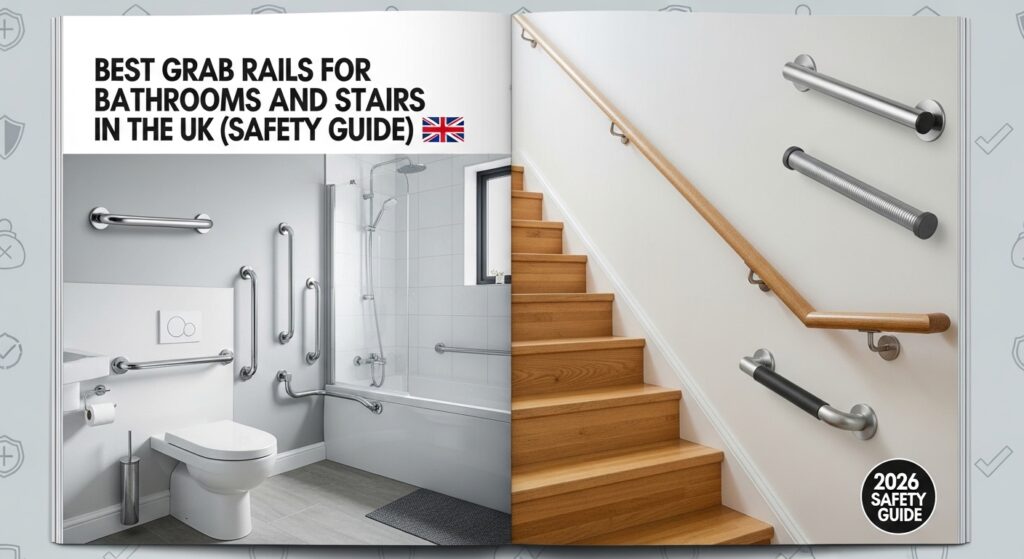
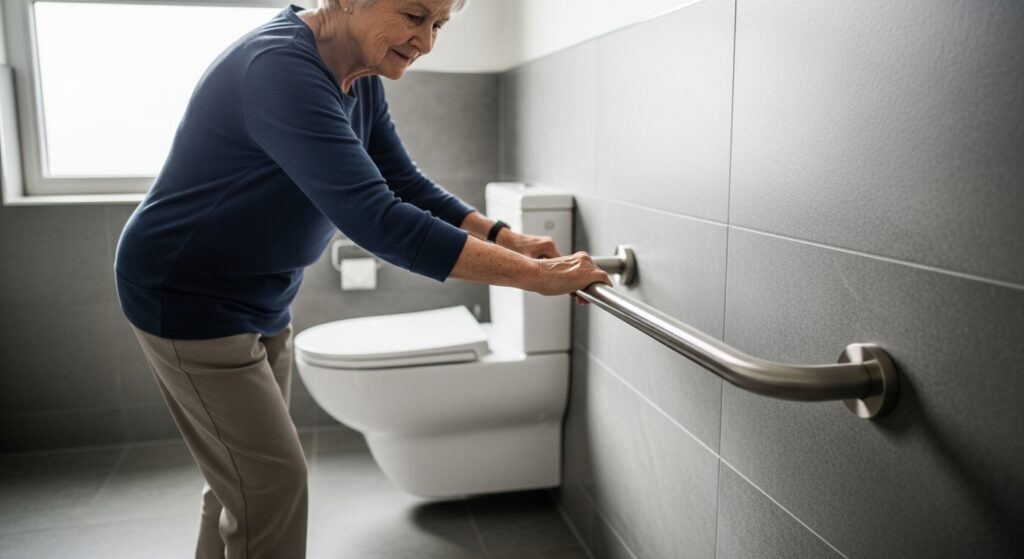
Falls are one of the biggest risks for older adults and people with reduced mobility. Bathrooms and staircases are especially dangerous because of slippery surfaces and height changes.
Grab rails are simple, affordable safety devices that provide extra stability when standing, sitting, or moving between levels. Installed correctly, they can significantly reduce fall risk and increase independence at home.
This guide explains the types of grab rails available in the UK, where to install them, what to look for, and how to choose the right one.
Why Grab Rails Are Important
Many people start struggling with:
- Standing up from the toilet
- Getting in and out of the bath
- Stepping into the shower
- Climbing stairs
- Maintaining balance while turning
A properly placed grab rail provides:
- Extra support
- Greater confidence
- Reduced strain on joints
- Lower risk of slipping
They are one of the most cost-effective home safety upgrades available.
Types of Grab Rails
Not all grab rails are the same. The right type depends on where you plan to install it.
1. Straight Grab Rails
The most common type. Fixed horizontally, vertically, or diagonally.
Best for:
- Bathrooms
- Hallways
- Staircases
Simple and strong. Ideal for general support.
2. Angled Grab Rails
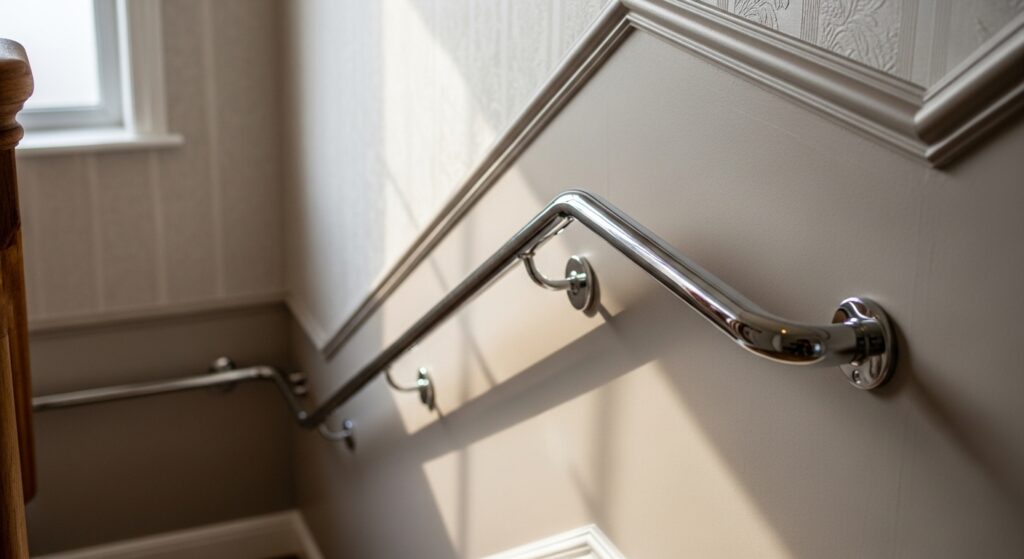
Installed diagonally to follow natural movement.
Best for:
- Staircases
- Shower entry points
They allow the hand to move naturally while stepping up or down.
3. Fold-Down Grab Rails
These hinge against the wall and fold away when not in use.
Best for:
- Beside toilets
- Small bathrooms
- Wheelchair users
They provide support when needed without taking permanent space.
4. Suction Grab Rails
Attach using suction cups instead of screws.
Best for:
- Temporary support
- Travel use
Important: These are not suitable for full body weight support. They should only be used as light balance aids.
For permanent safety, wall-fixed rails are recommended.
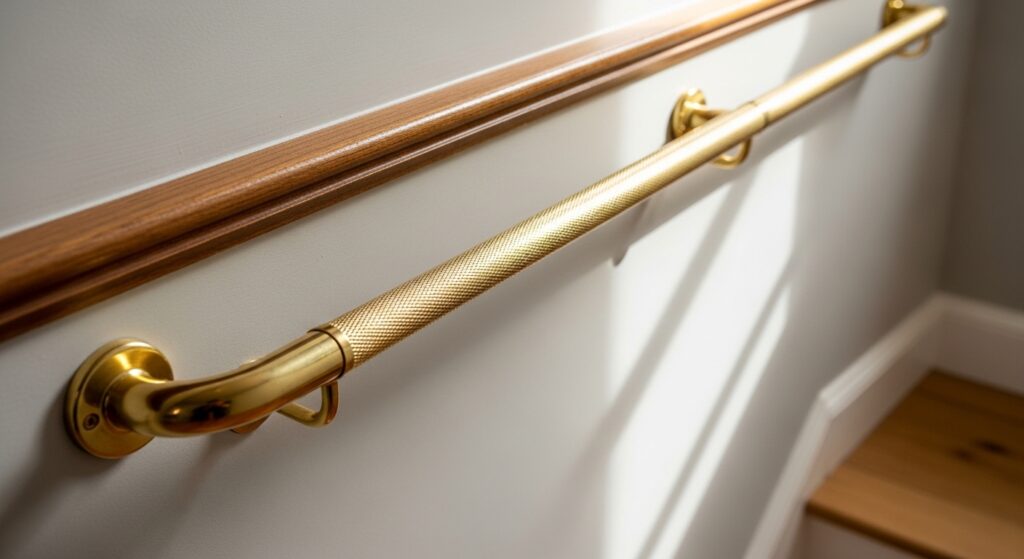
5. Textured or Anti-Slip Grab Rails
Include grip patterns for wet environments.
Best for:
- Showers
- Wet rooms
- Outdoor steps
They reduce slipping even with wet hands.
Where Should Grab Rails Be Installed?
Correct placement matters more than the rail itself.
In the Bathroom
Common positions:
- Beside the toilet
- Inside the shower
- Next to the bath
- Near the sink
Horizontal rails help with sitting and standing. Vertical rails help with balance while stepping.
On Stairs
Install:
- Along the wall side
- At the top landing
- At the bottom of the stairs
Some people benefit from rails on both sides.
In Hallways or Entrances
Helpful near:
- Front door steps
- Raised thresholds
- Sloped pathways
Outdoor rails should be rust-resistant and weatherproof.
What Material Is Best?
Most grab rails are made from:
- Stainless steel
- Aluminium
- Powder-coated steel
- Plastic-coated metal
Stainless steel is strong and rust-resistant. Plastic-coated rails feel warmer to touch and provide extra grip.
For bathrooms, corrosion resistance is essential.
Weight Capacity and Strength
Always check weight capacity before buying.
Most wall-mounted grab rails support:
- 100 kg to 200 kg
Heavy-duty models are available for higher requirements.
Important: The strength of the wall and correct installation matter just as much as the rail itself.
Professional Installation vs DIY
If installing into solid brick or reinforced walls, DIY is possible for confident homeowners.
However, if walls are:
- Plasterboard
- Tiled
- Hollow
Professional installation is recommended to ensure secure fixing into wall studs or reinforced backing.
Incorrect installation reduces safety.
How Much Do Grab Rails Cost in the UK?
Typical price ranges:
- Basic straight rail: £10 – £30
- Angled rail: £20 – £50
- Fold-down rail: £40 – £150
- Heavy-duty bariatric rail: £60 – £200
Installation costs vary depending on wall type.
Can You Get Grab Rails Through the Council?
In many cases, yes.
If assessed by an occupational therapist, your local authority may provide and install grab rails as part of minor adaptations.
This usually depends on:
- Mobility needs
- Fall risk
- Funding availability
Small adaptations are often completed quickly once approved.
Are Grab Rails Covered by Disabled Facilities Grant?
If part of larger bathroom adaptations, they may be included within a Disabled Facilities Grant application.
Standalone minor rails are often handled separately by council adaptation teams.
Are They VAT Exempt?
If you have a long-term illness or disability, you may qualify for VAT exemption when purchasing mobility aids.
You’ll need to complete a declaration confirming eligibility. This removes the 20 percent VAT from the price.
Common Mistakes to Avoid
- Choosing suction rails for permanent support
- Installing at incorrect height
- Ignoring wall strength
- Buying decorative rails not designed for weight bearing
- Skipping professional advice for complex needs
Safety should always come first.
What Is the Correct Height?
There is no single universal height.
General guidance:
- Toilet side rail: level with forearm when seated
- Shower rail: around chest height
- Stair rail: follow the natural slope of stairs
An occupational therapist can assess ideal positioning.
Do Grab Rails Look Clinical?
Modern designs are far more discreet than older models.
Many options now come in:
- White
- Chrome
- Brushed steel
- Black finishes
They can blend with modern bathrooms without looking institutional.
Are They Worth It?
Yes. Grab rails are one of the lowest-cost ways to prevent serious falls.
A simple £25 rail can prevent hospitalisation, fractures, and long recovery periods.
For many households, they provide peace of mind as mobility changes over time.
Final Thoughts
Falls are rarely caused by one single issue. They happen when balance, strength, and environment combine.
Grab rails address the environmental risk factor directly.
They are affordable, practical, and highly effective when installed correctly.
If mobility is declining, installing support early can prevent injuries later.
Disclaimer
This article is for general informational purposes only and does not constitute medical or installation advice. Always consult a qualified professional for structural modifications. FreedomMove may earn commission from affiliate links where applicable.