
Introduction
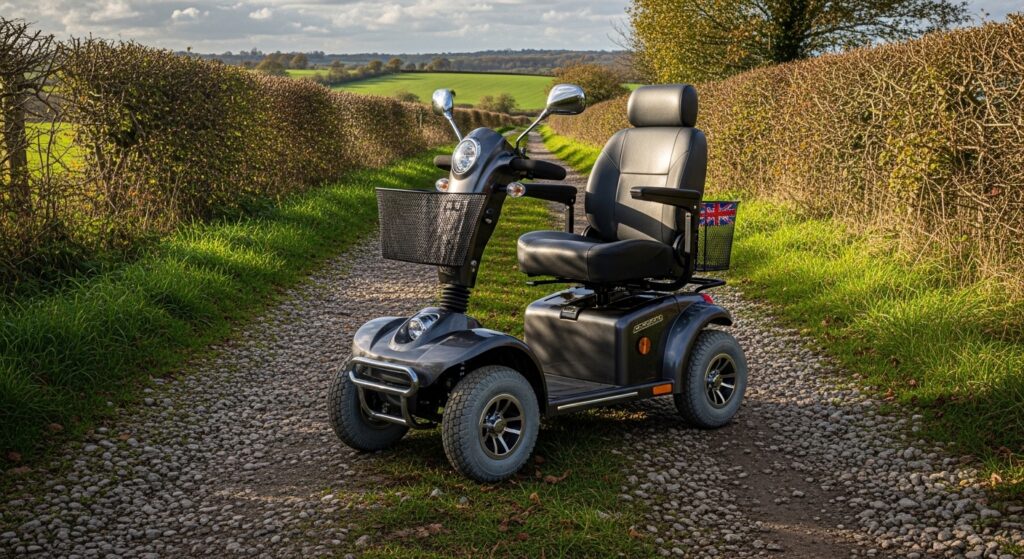
Standard mobility scooters work well on smooth pavements and shopping centres. But the moment you move onto gravel paths, country lanes, uneven pavements, or rural tracks, many models struggle.
For users living in rural areas or those who enjoy outdoor independence, a rough terrain mobility scooter is not a luxury. It is essential.
In this 2026 UK buying guide, we will cover:
- What makes a scooter suitable for rough terrain
- Key features that actually matter
- Realistic price ranges
- Pros and cons of different models
- Common buying mistakes
- Legal rules in the UK
- How to choose the right scooter for your needs
If you want confidence on uneven ground, this guide will help you choose properly.
What Is a Rough Terrain Mobility Scooter?
A rough terrain mobility scooter is designed for:
- Gravel paths
- Country roads
- Park trails
- Uneven pavements
- Grass and compacted soil
- Slight inclines
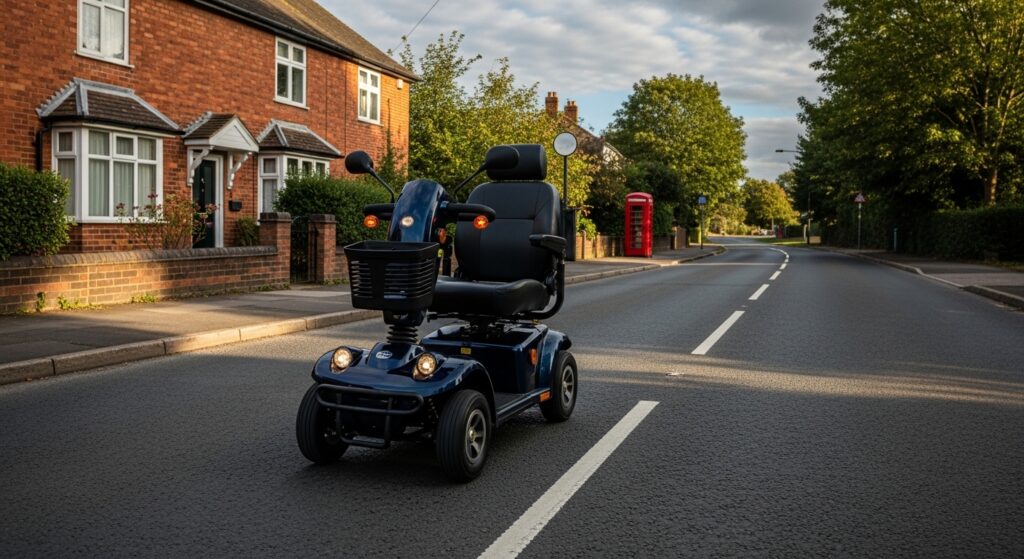
These scooters are typically Class 3 mobility scooters in the UK, meaning they can be used on roads and pavements.
They differ from standard travel scooters in three key ways:
- Larger, deeper tread tyres
- Stronger suspension
- More powerful motors
Class 2 vs Class 3 Scooters (UK Rules 2026)
Before buying, understand the legal classification.
Class 2 Mobility Scooters
- Maximum speed: 4mph
- Pavement use only
- Lighter and smaller
- Not ideal for rough terrain
Class 3 Mobility Scooters
- Maximum speed: 8mph (road use)
- 4mph limit on pavements
- Must be registered with DVLA
- Suitable for uneven and rural areas
If you plan to use your scooter on country lanes or roads, you will likely need a Class 3 model.
Key Features to Look for in 2026
Not all “all-terrain” claims are equal. Focus on these essentials.
1. Tyre Type and Size
For rough terrain, look for:
- Large pneumatic tyres
- Deep tread patterns
- 10–14 inch wheels
Solid tyres are low maintenance but less comfortable on uneven ground.
Pneumatic tyres provide better grip and shock absorption.
2. Suspension System
This is critical.
Good suspension reduces:
- Vibration
- Back strain
- Joint discomfort
- Instability on uneven paths
Four-wheel suspension systems are ideal for rural use.
3. Motor Power
Rough terrain requires stronger motors.
Look for:
- 500W or higher
- Rear-wheel drive
- Smooth acceleration control
Weak motors struggle on inclines and loose surfaces.
4. Battery Range
Outdoor use often means longer distances.
In 2026, most quality rough terrain scooters offer:
- 20–35 miles per charge
Always check:
- Realistic range (not just advertised maximum)
- Charging time
- Battery replacement cost
5. Weight Capacity
Heavier-duty scooters often support:
- 21–28 stone (133–178kg)
Check the maximum weight rating carefully. Overloading reduces performance and safety.
Price Breakdown in the UK (2026)
Rough terrain scooters are an investment.
Entry-Level All-Terrain Models
£1,200 – £1,800
Suitable for light gravel and uneven pavements.
Mid-Range Outdoor Models
£1,800 – £2,800
Better suspension, stronger motors, longer range.
Premium Heavy-Duty Scooters
£2,800 – £4,500+
Full suspension, high capacity batteries, advanced stability systems.
Additional Costs
- Insurance (recommended): £60–£150 per year
- Battery replacement: £150–£400
- Servicing: £80–£200 annually
Pros and Cons of Rough Terrain Scooters
Pros
- Greater independence outdoors
- Comfortable on uneven ground
- Longer battery range
- Road-legal (Class 3)
- Stronger frames
Cons
- Higher cost
- Heavier and harder to transport
- Larger storage space required
- More expensive maintenance
How to Choose the Right Model (Step-by-Step)
Step 1: Assess Where You Will Use It
Be honest:
- Mostly pavements?
- Gravel driveway?
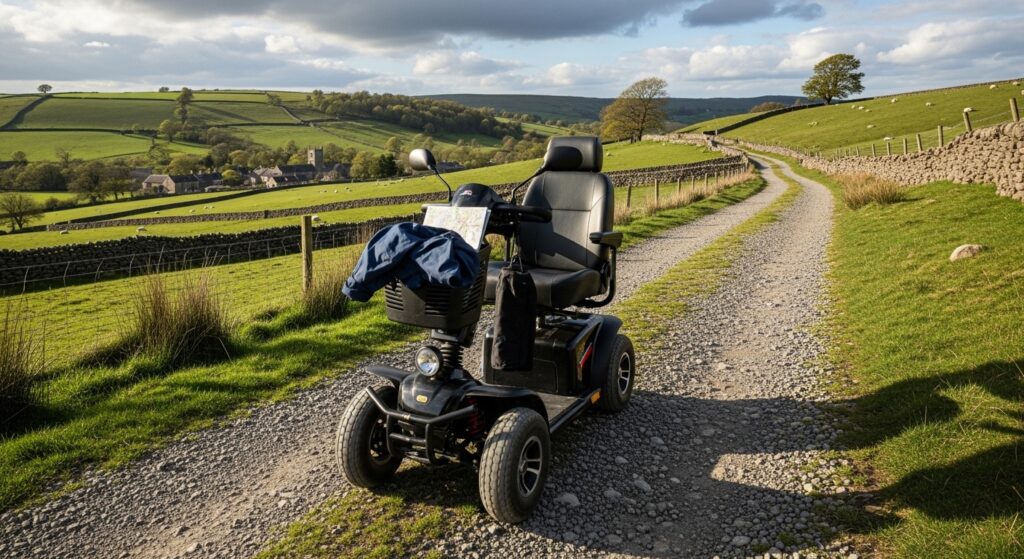
- Countryside paths?
- Steep inclines?
Choose based on your actual environment.
Step 2: Measure Storage Space
Rough terrain scooters are larger.
Measure:
- Garage width
- Door access
- Hallway clearance
Some models do not fit standard sheds.
Step 3: Test Suspension Comfort
If possible, test drive on:
- Uneven surfaces
- Slight slopes
- Bumpy paths
Comfort matters, especially for users with arthritis or back pain.
Step 4: Check Range vs Daily Needs
If you regularly travel 10–15 miles, choose a scooter with at least 25-mile range for safety buffer.
Step 5: Consider Transport Needs
These scooters are heavy.
If you need to transport it in a car:
- Consider a hoist
- Check boot size
- Look into vehicle adaptations
Common Mistakes to Avoid
Buying Based on Looks Alone
A stylish scooter means nothing if it cannot handle your terrain.
Ignoring Weight and Stability
Lighter scooters may tip on uneven surfaces.
Underestimating Battery Needs
Cold weather reduces battery performance.
Not Budgeting for Maintenance
Outdoor use increases wear and tear.
Are Rough Terrain Scooters Covered by Motability?
Yes, some models are available through the Motability Scheme in the UK.
Eligibility usually requires:
- Higher rate mobility component of PIP
- War Pensioners’ Mobility Supplement
- Higher rate DLA mobility component
Check directly with approved suppliers.
Safety Tips for Rural and Outdoor Use
- Slow down on loose gravel
- Avoid steep slopes beyond manufacturer limits
- Keep tyres properly inflated
- Service annually
- Use lights when on roads
Always follow UK mobility scooter highway guidance.
- How to Choose the Right Power Wheelchair in the UK
- Vehicle Adaptations for Disabled Drivers (2026)
- Blue Badge for Hidden Disabilities (2026 Guide)
FAQs
Can I use a rough terrain scooter on the road?
Yes, if it is a Class 3 scooter and properly registered.
Do I need insurance?
It is not legally required but strongly recommended.
Can they handle hills?
Most can manage moderate inclines, but check the maximum gradient specification.
How long do batteries last?
Typically 1–3 years depending on usage and charging habits.
Are they waterproof?
They are weather-resistant, but not fully waterproof. Avoid deep puddles.
Conclusion
If you live in a rural area or regularly travel across uneven surfaces, a rough terrain mobility scooter can transform your independence.
The key is choosing a model with:
- Strong suspension
- Powerful motor
- Reliable battery range
- Proper UK classification
Avoid buying purely on price. Comfort, stability, and long-term reliability matter far more.
Investing in the right scooter in 2026 means safer journeys and greater freedom outdoors.
Disclaimer
This article is for informational purposes only and does not constitute legal, medical or financial advice. Always consult official UK sources or a qualified professional.