
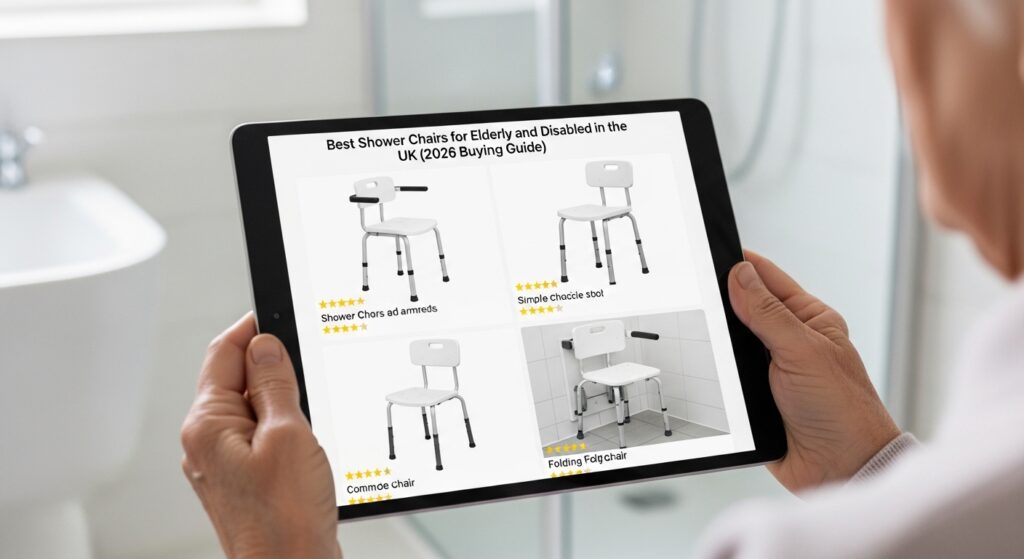
Bathrooms are one of the most common places where falls happen. Wet floors, limited balance, and reduced strength make showering risky for many older adults and people with disabilities.
A shower chair can dramatically reduce that risk. It provides stability, comfort, and independence during bathing.
This guide explains everything you need to know before buying a shower chair in the UK.
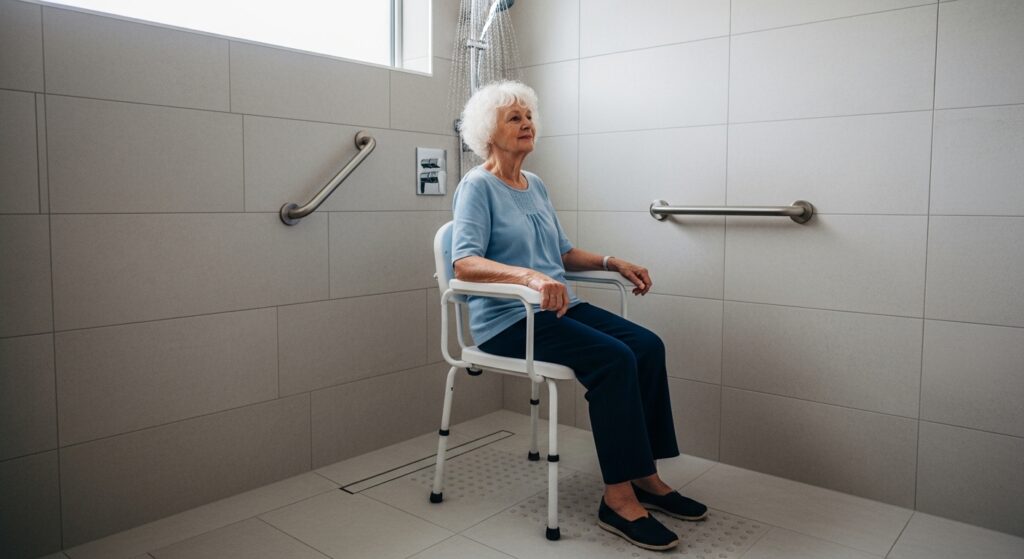
Why Shower Chairs Matter
For many people, standing in the shower becomes difficult due to:
- Arthritis
- Weak legs
- Poor balance
- Recovery from surgery
- Stroke after-effects
- Parkinson’s disease
- Chronic fatigue
A shower chair allows the user to sit safely while washing, reducing strain and fall risk.
It also reduces physical effort for carers assisting with bathing.
Types of Shower Chairs
Not all shower chairs are the same. Choosing the right type depends on mobility level and bathroom layout.
1. Basic Shower Stool
Simple, backless stool with four legs.
Best for:
- Mild balance issues
- Smaller shower spaces
- Short-term recovery
Pros:
- Lightweight
- Affordable
- Easy to move
Cons:
- No back support
- Limited comfort
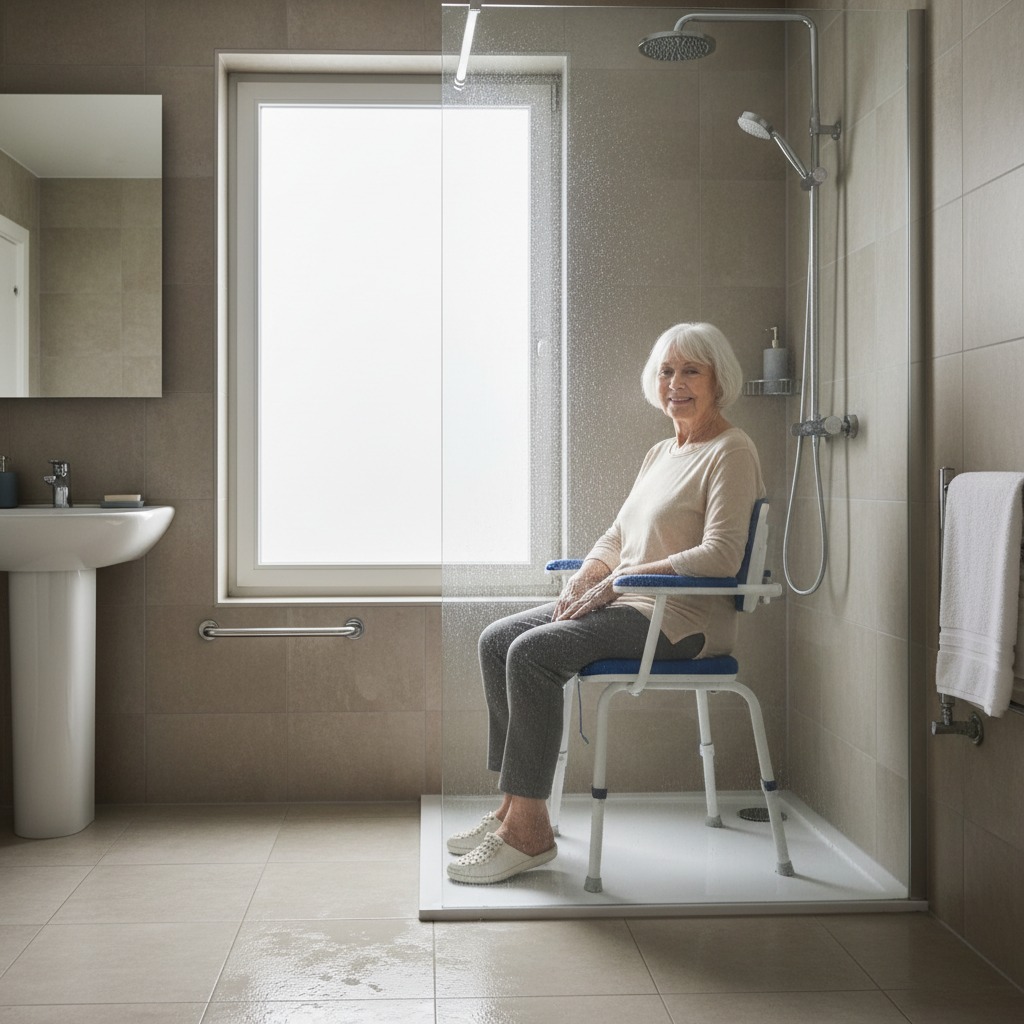
2. Shower Chair with Backrest
Includes a supportive back panel.
Best for:
- Reduced core strength
- Longer shower time
- Elderly users
Pros:
- Better posture
- More comfortable
- Increased stability
Cons:
- Slightly larger footprint
3. Shower Chair with Arms
Adds side armrests for support when sitting and standing.
Best for:
- Users who struggle to lower themselves
- Higher fall risk individuals
Pros:
- Extra stability
- Easier transfers
Cons:
- Takes more space
4. Adjustable Height Shower Chairs
Allows seat height changes.
Best for:
- Shared use
- Different user heights
- Post-surgery recovery
Correct seat height is important. Feet should rest flat on the floor and knees should bend naturally.
5. Wall-Mounted Fold-Down Seats
Fixed to the wall inside the shower.
Best for:
- Small bathrooms
- Permanent adaptations
- Wet rooms
Pros:
- Space saving
- Stable
- Clean look
Cons:
- Requires installation
- Less portable
Key Features to Look For
Before buying, check these important features.
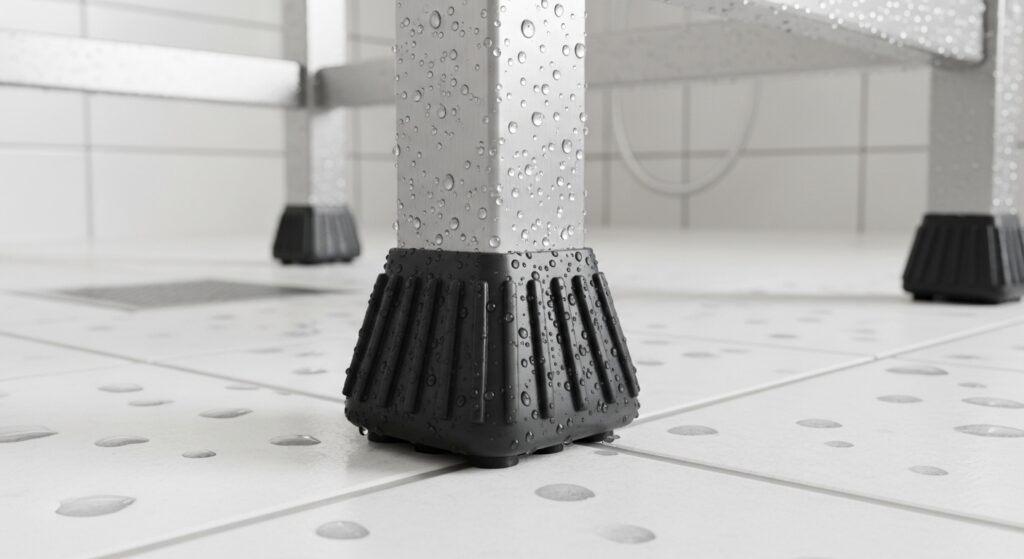
Non-Slip Feet
Rubber-tipped legs prevent sliding on wet surfaces.
This is essential for safety.
Drainage Holes
Seats with holes allow water to drain and prevent pooling.
Improves hygiene and comfort.
Weight Capacity
Most standard chairs support 100–150 kg.
Bariatric models are available for higher weight requirements.
Always check manufacturer limits.
Frame Material
Most shower chairs use:
- Aluminium (lightweight and rust-resistant)
- Stainless steel
- Heavy-duty reinforced plastic
Aluminium is usually best for home use.
Comfort Padding
Some models include padded seats and backs.
Good for:
- Long showers
- Sensitive skin
- Frail users
But ensure padding is waterproof and mould-resistant.
How Much Do Shower Chairs Cost in the UK?
Typical price ranges:
- Basic stool: £20 – £40
- Backrest chair: £40 – £80
- Armrest model: £60 – £120
- Heavy-duty models: £120+
- Wall-mounted fold-down seat: £70 – £200
Prices vary depending on brand and weight capacity.
Can You Get One Through the NHS or Council?
In some cases, yes.
If assessed by an occupational therapist, your local council may provide basic bathroom aids.
You may qualify if:
- You have a long-term disability
- You are at risk of falling
- You struggle to bathe independently
Availability depends on local funding and assessment.
Are Shower Chairs VAT Exempt?
Yes, in many cases.
If you are chronically sick or disabled, you may qualify for VAT exemption.
You must:
- Confirm eligibility
- Complete a VAT declaration form
- Purchase from a supplier that offers VAT relief
This removes the 20 percent VAT charge.
Safety Tips When Using a Shower Chair
Even with a chair, safety matters.
- Place chair on flat, stable surface
- Check rubber feet regularly
- Avoid leaning too far forward
- Keep frequently used items within reach
- Consider a grab rail for extra support
Combining a shower chair with grab rails increases safety significantly.
Do You Need a Shower Chair or Bath Seat?
If you have a bathtub instead of a shower, a bath board or bath seat may be more suitable.
For wet rooms and walk-in showers, a shower chair works better.
Bathroom layout plays a major role in choosing the correct aid.
Common Buying Mistakes
Avoid these:
- Buying without measuring shower space
- Ignoring weight capacity
- Choosing non-adjustable height
- Buying indoor furniture instead of waterproof models
- Not checking return policy
Safety and correct sizing matter more than price.
Who Should Consider One?
A shower chair is suitable for:
- Elderly people living alone
- Disabled adults
- Post-surgery recovery patients
- Individuals with chronic joint pain
- Anyone worried about bathroom falls
It can extend independent living at home.
Are They Worth It?
For most people with reduced mobility, yes.
The cost is relatively low compared to the risk of injury from falls.
A simple £50 chair can prevent hospital visits and loss of independence.
That makes it one of the most practical home safety upgrades available.
Final Thoughts
Bathroom safety should never be ignored. Falls in wet environments are common but preventable.
A properly chosen shower chair improves safety, comfort, and confidence.
Measure carefully, check weight limits, and choose a model suited to your mobility level.
Small adjustments in the home often make a big difference in daily life.
Disclaimer
This article is for general informational purposes only and does not constitute medical advice. Always consult a healthcare professional or occupational therapist before purchasing specialist equipment. FreedomMove may earn commission from affiliate links where applicable.