
If you or a family member struggles with mobility, the Blue Badge scheme can make daily life much easier. But many people in the UK are still confused about who qualifies, how to apply, and what the badge actually allows you to do.
This guide explains everything clearly, using verified UK government information. No myths. No guesswork. Just practical, real-world guidance.
What Is the Blue Badge Scheme?
The Blue Badge scheme is a UK-wide parking permit system that allows people with disabilities or mobility difficulties to park closer to their destination.
It is managed by local councils under national guidance from the UK government.
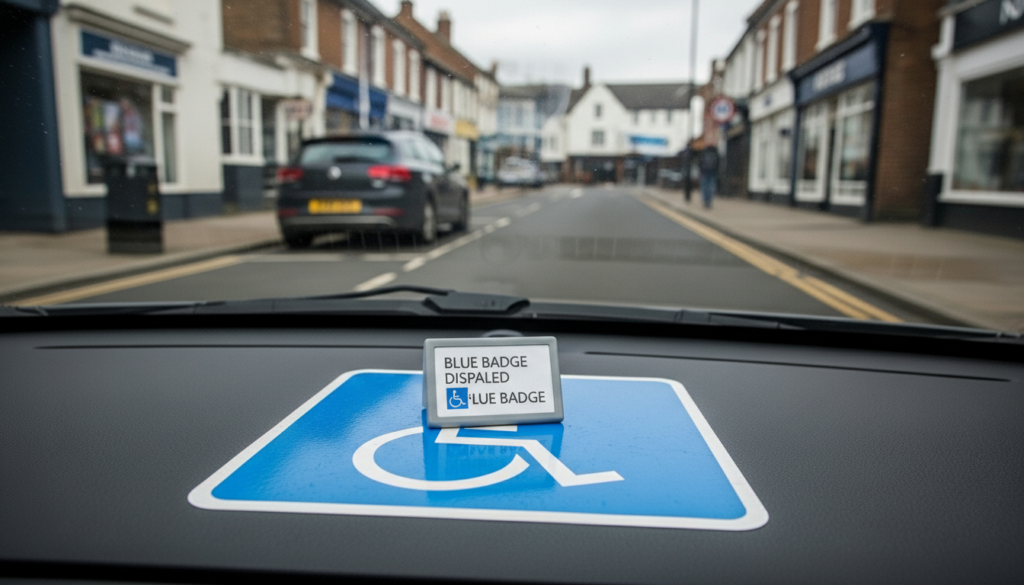
A Blue Badge allows you to:
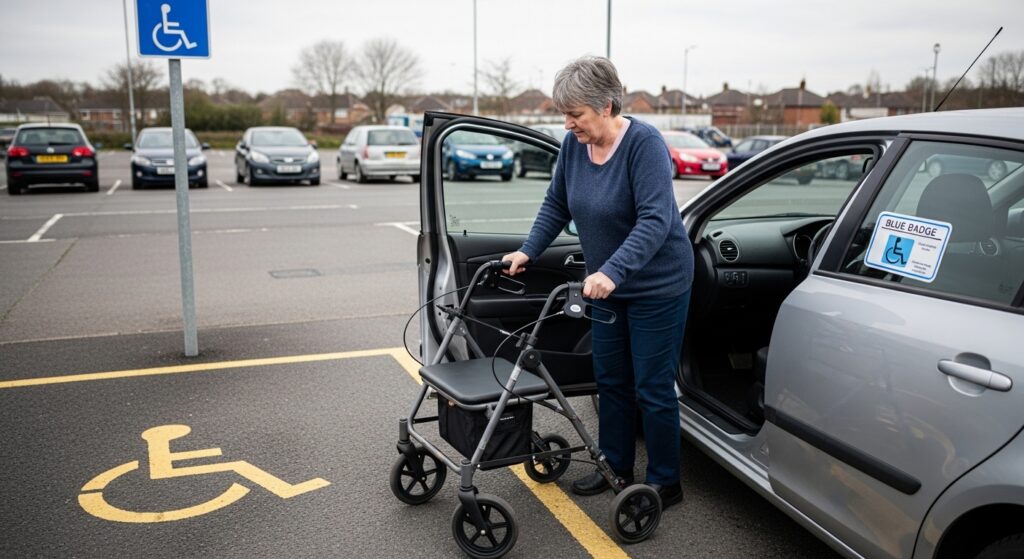
- Park in disabled bays
- Park on single or double yellow lines (with restrictions)
- Park for free in some pay-and-display areas
- Stay longer in certain time-limited parking areas
The badge belongs to the person, not the vehicle. It can be used in any car as long as the badge holder is present.
Who Is Automatically Eligible?
You qualify automatically if you:
- Receive Higher Rate Mobility Component of Disability Living Allowance (DLA)
- Receive Personal Independence Payment (PIP) with 8+ points in the “moving around” category
- Receive War Pensioners’ Mobility Supplement
- Are registered blind (severely sight impaired)
- Receive Armed Forces Compensation Scheme mobility award (tariff 1–8)
If you meet one of these, approval is usually straightforward.
Who May Qualify After Assessment?
Even if you do not receive the benefits above, you may still qualify if:
- You cannot walk more than 50 metres without severe discomfort
- You walk very slowly due to pain, breathlessness or balance issues
- You are at risk of serious harm when walking (for example due to neurological conditions)
- You have a hidden disability affecting your ability to travel safely
Hidden disabilities were formally included in 2019, meaning people with severe anxiety, autism, or cognitive conditions may qualify if travel causes significant distress.
Each council conducts its own assessment. You may be asked to attend a mobility assessment or provide medical evidence.
Conditions That Often Qualify
Eligibility is based on mobility impact, not diagnosis. However, common qualifying conditions include:
- Multiple sclerosis
- Severe arthritis
- Parkinson’s disease
- COPD
- Heart failure
- Stroke after-effects
- Spinal injuries
- Amputations
- Severe autism with mobility-related distress
Again, what matters is how your condition affects your walking ability.
How to Apply for a Blue Badge in the UK
You must apply through your local council.
Applications are completed online via the official government portal. You’ll need:
- Proof of identity
- Proof of address
- Recent photograph
- Benefit award letters (if applicable)
- Medical evidence if applying under discretionary criteria
The standard fee in England is up to £10. In Scotland it is £20. In Wales it is free.
Badges are usually valid for three years.
How Long Does It Take?
Processing time depends on your council and whether an assessment is required.
- Automatic eligibility: 2–4 weeks
- Assessment required: 6–12 weeks
Delays can happen if documents are missing.
What You Can and Cannot Do With a Blue Badge
You CAN:
- Park in disabled bays
- Park on single or double yellow lines for up to 3 hours (unless loading restrictions apply)
- Use the badge across the UK
- Use it in any vehicle while you are present
You CANNOT:
- Use it if the badge holder is not travelling
- Park where loading restrictions are active
- Park in bus lanes
- Park in private car parks without following their rules
Misuse can lead to fines up to £1,000 and badge confiscation.
Common Mistakes That Lead to Rejection
Many applications are refused because:
- Medical evidence is too vague
- The application focuses on diagnosis rather than mobility impact
- Walking distance is exaggerated without documentation
- Supporting letters lack specific details
When applying, describe:
- How far you can walk
- What happens when you try
- Pain levels
- Recovery time after walking
- Any falls or safety concerns
Be specific.
Blue Badge for Children
Children under three usually do not qualify unless they require bulky medical equipment or need to be kept near a vehicle for emergency treatment.
Children over three are assessed under the same mobility rules as adults.
Blue Badge and Hidden Disabilities
Since 2019, people with non-visible disabilities can qualify.
Examples include:
- Severe autism causing overwhelming distress in traffic environments
- Dementia with wandering risk
- Severe anxiety disorders that make safe travel impossible
Evidence must show that the disability causes very considerable psychological distress during journeys.
This change has helped thousands of families who were previously excluded.
Using Your Blue Badge Abroad
UK Blue Badges are recognised in most EU countries, but rules vary. Always check local parking laws before travelling.
Renewing Your Blue Badge
Renewal is not automatic.
You must apply before expiry. Councils recommend applying at least 8 weeks before your badge runs out.
You may need to provide updated medical evidence.
If Your Application Is Refused
You can:
- Request a review
- Provide additional evidence
- Reapply if your condition worsens
Each council has its own appeals process.
Practical Tips for Approval
- Include consultant letters if possible
- Ask your GP for a functional impact summary
- Keep a short diary of mobility issues
- Avoid emotional language, stick to facts
- Be honest about distances
Clear, factual applications are more successful.
Final Thoughts
The Blue Badge scheme is one of the most practical mobility supports available in the UK. But approval depends on demonstrating real mobility impact, not simply having a medical condition.
If you believe you qualify, apply through your local council and provide clear, detailed evidence.
It can make everyday life significantly easier.
Internal Linking Suggestions (For FreedomMove)
Add links to:
- Mobility aids and equipment reviews
- Practical disability support guides
- PIP eligibility guide
- Best mobility scooters UK
Disclaimer
This article is for informational purposes only. Eligibility decisions are made by local councils under UK government guidance. We are not affiliated with any council or government body. If you choose to purchase products or services mentioned on this website, you do so at your own discretion. FreedomMove is not responsible for individual outcomes, approvals, or product performance.