
Council Tax is one of the biggest regular household expenses in the UK. For disabled people and families, there are specific reductions, discounts and band adjustments available. Many households qualify but never apply simply because they do not know the rules.
This guide explains who qualifies, how much you could save, how to apply, and the common mistakes to avoid.
What Is Council Tax Reduction?
Council Tax Reduction (CTR), sometimes called Council Tax Support, helps people on low income pay their Council Tax bill.
If you are disabled, you may qualify for:
- A reduction based on income
- A disability band reduction
- A 25% single person discount
- A full exemption in some cases
The rules vary slightly between councils, but the core structure remains similar across England, Scotland and Wales.
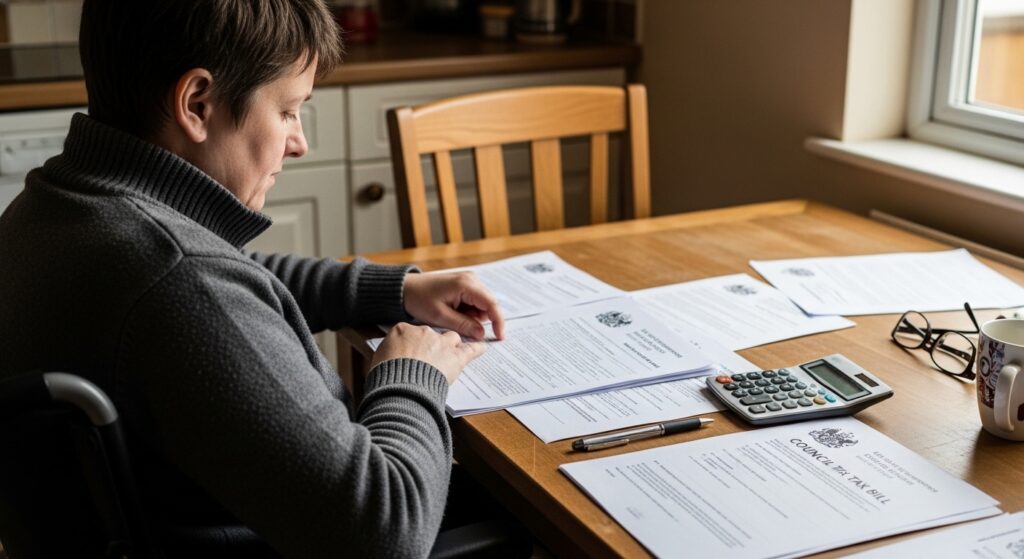
Disability Band Reduction Explained
This is different from standard income-based support.
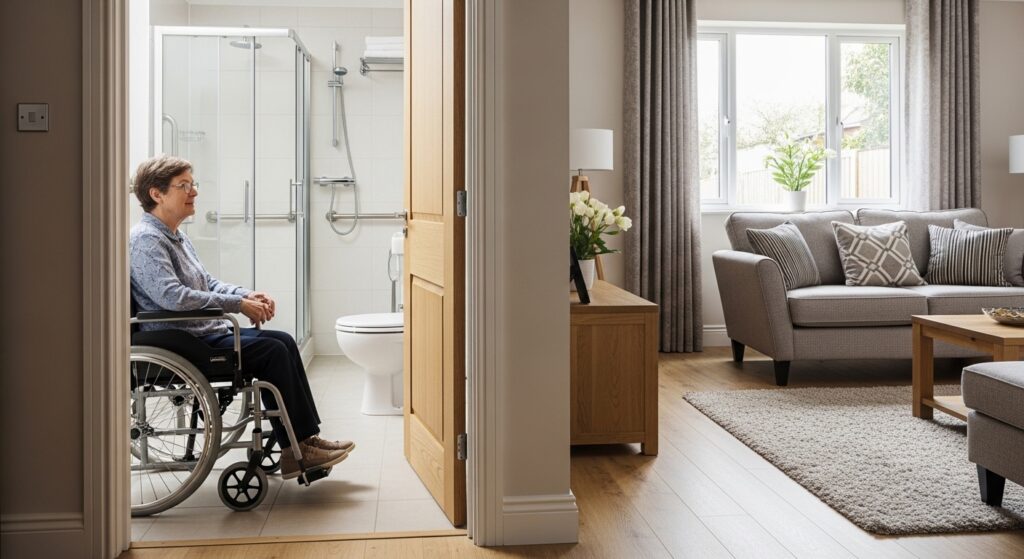
If someone in the household is disabled and the property has been adapted to meet their needs, the property may qualify for a band reduction.
Your home must have one of the following:
- An extra bathroom or kitchen required for the disabled person
- A room mainly used to meet disability needs (therapy room, medical equipment space)
- Extra indoor space for wheelchair use
If approved, your home is charged at the Council Tax band below your actual band.
Example:
If your home is Band D, you pay Band C rates.
If your home is already in Band A, you receive a reduction equivalent to one band.
Who Can Apply?
You can apply if:
- You are disabled
- You live with a disabled adult or child
- Your home has been adapted
- You receive disability-related benefits
- You are on a low income
Receiving benefits like PIP or Attendance Allowance does not automatically qualify you, but it strengthens your case.
Income-Based Council Tax Reduction
If you are on a low income, you may qualify for income-based reduction even without home adaptations.
Eligibility depends on:
- Household income
- Savings
- Number of people in the property
- Whether you receive Universal Credit
Each local council runs its own scheme, so the exact reduction amount varies.
Some households qualify for up to 100% reduction.
Council Tax Exemptions for Severe Mental Impairment
If a person is medically certified as severely mentally impaired and receives certain benefits, they may be disregarded for Council Tax purposes.
If they live alone, the property may become fully exempt.
If they live with one other adult, that adult may qualify for a 25% discount.
This rule is commonly misunderstood but can result in significant savings.
Carers and Council Tax Discounts
If you are a live-in carer and meet certain conditions, you may be disregarded for Council Tax purposes.
To qualify:
- You must provide at least 35 hours of care per week
- The person you care for must receive a qualifying disability benefit
- You must not be the spouse or parent of a child under 18
If eligible, this can reduce the household Council Tax bill.
How Much Could You Save?
Savings depend on:
- Your Council Tax band
- Your local council’s scheme
- Your income
- Whether disability adaptations apply
In many cases:
- Band reduction saves hundreds per year
- Income reduction can reduce bills by 50–100%
- Severe mental impairment exemptions can eliminate bills entirely
Even small reductions matter over time.
How to Apply
You must apply directly through your local council website.
Search:
“Council Tax reduction” + your council name
You will typically need:
- Proof of income
- Benefit award letters
- Medical evidence (if applying for disability band reduction)
- Proof of property adaptations
Applications are usually submitted online.
Can You Backdate a Claim?
Many councils allow backdating if:
- You were eligible previously
- You provide evidence
- You apply within a reasonable time
Backdating rules vary by council, so always ask when applying.
Common Mistakes to Avoid
- Assuming you do not qualify without checking
- Not applying for band reduction after installing adaptations
- Failing to update the council when income changes
- Believing PIP automatically reduces Council Tax
You must apply. Reductions are not automatic.
Interaction With Other Benefits
Council Tax Reduction does not affect:
- PIP
- Attendance Allowance
- Carer’s Allowance
It may interact with Universal Credit calculations, but generally works alongside it.
Is It Worth Applying?
Yes.
Even if you think the reduction will be small, many households are surprised by how much they save.
If your home has disability adaptations, you should always apply for band reduction.
Final Thoughts
Council Tax support is one of the most underused forms of financial help in the UK.
If you are disabled, care for someone who is disabled, or live in an adapted property, you may qualify for a reduction or exemption.
Check your local council website and apply directly. The process is usually straightforward and can result in meaningful annual savings.
Disclaimer
This article is for general informational purposes only. Council Tax rules and local authority schemes may change. Always check your local council’s official website or speak with a qualified adviser before making financial decisions. FreedomMove is not responsible for individual claim outcomes.
Internal Linking Suggestions
Link naturally to: