
Introduction
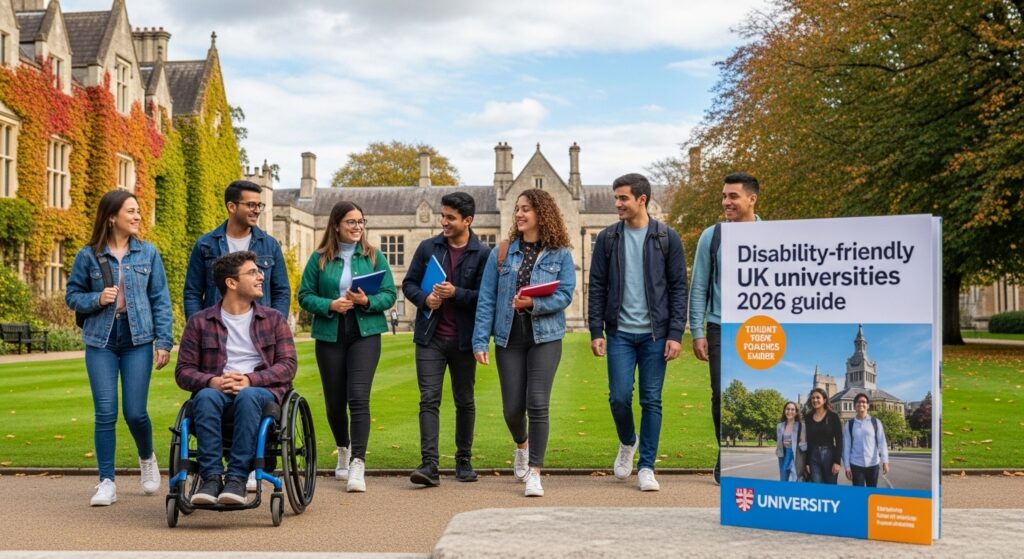
Choosing the right university is challenging, but for students with disabilities, accessibility and support are crucial factors. The UK has made significant strides in providing disability-friendly environments, ensuring students have equal opportunities to succeed academically and socially.
This 2026 guide covers everything you need to know about Disability-Friendly UK Universities—from services and grants to assistive technology and real-life student tips. Whether you’re applying for a bachelor’s degree, postgraduate course, or vocational training, this guide will help you make informed decisions.

What Makes a University Disability-Friendly?
A disability-friendly university offers more than ramps and lifts. Key factors include:
- Dedicated Disability Support Teams: Staff trained to assist students with various needs.
- Accessible Buildings: Lecture halls, libraries, labs, and accommodation that comply with accessibility standards.
- Assistive Technology: Screen readers, speech-to-text software, ergonomic equipment, and adaptive keyboards.
- Inclusive Policies: Flexible deadlines, exam accommodations, and mental health support.
- Financial Assistance: Grants such as Disabled Students Allowance (DSA) to cover equipment and support.
Top Disability-Friendly Universities in the UK (2026)
Here are some universities widely recognised for their disability support:
1. University of Cambridge
- Accessibility: Full access to lecture theatres, libraries, and laboratories.
- Support Services: Cambridge University Disability Resource Centre offers specialist equipment and one-on-one support.
- Grants & Funding: DSA and internal bursaries for students with disabilities.
2. University of Oxford
- Accessibility: Step-free routes across main campuses; accessible accommodation options.
- Support Services: Disabled Students’ Advisory Service provides mentoring and exam adjustments.
- Assistive Technology: Screen readers, voice recognition software, ergonomic chairs, and note-taking support.
3. University College London (UCL)
- Accessibility: Modern buildings with lifts and accessible toilets.
- Support Services: Student Disability Services team offers support plans and mental health assistance.
- Additional Features: Offers specialized scholarships for students with disabilities.
4. University of Edinburgh
- Accessibility: Campus-wide wheelchair access, accessible sports facilities.
- Support Services: Disability Information and Advice Centre provides personalized guidance.
- Assistive Technology: Loan schemes for adaptive equipment.
5. University of Manchester
- Accessibility: Fully accessible campus, including teaching spaces and labs.
- Support Services: Student Support Services team provides DSA support, mental health advice, and study skill workshops.
- Extra Benefits: Flexible exam arrangements and alternative format course materials.
Assistive Technology Available for Students
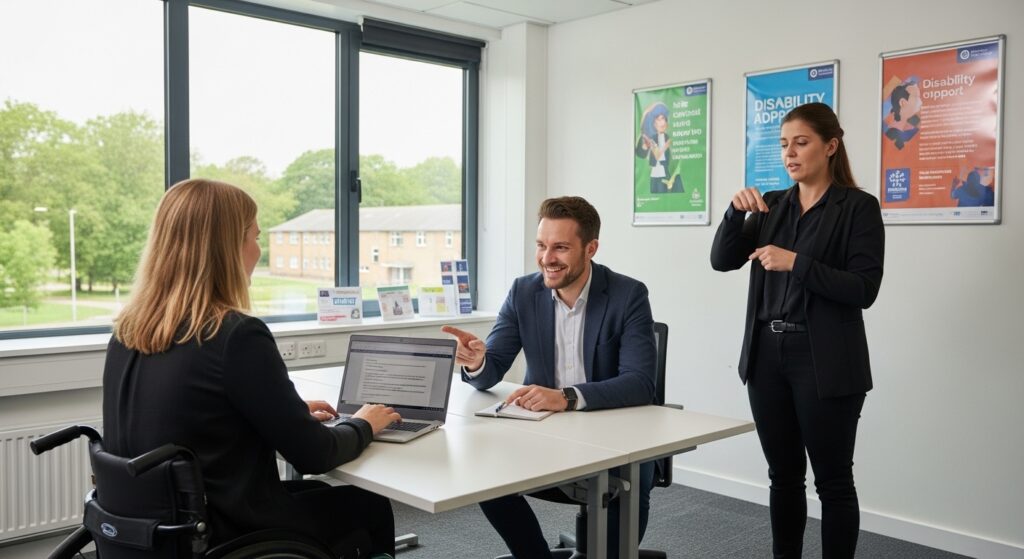
Technology plays a critical role in enabling students to succeed. Some commonly used tools include:
- Screen Readers & Magnification Software – For visually impaired students.
- Voice Recognition & Dictation Software – Ideal for students with motor disabilities or dyslexia.
- Adaptive Keyboards & Mice – Helps students with limited mobility.
- Recording Devices & Note-Taking Apps – Supports memory and concentration challenges.
- Specialized Software for Dyslexia & ADHD – Spellcheckers, text-to-speech, and mind-mapping tools.
Grants and Financial Support
Students with disabilities can access financial help to cover extra costs:
- Disabled Students Allowance (DSA): Covers assistive technology, non-medical helpers, and study support.
- University Bursaries: Many universities provide additional funding for disability-related expenses.
- Charitable Funding: Organisations like Scope, Leonard Cheshire, and RNIB offer equipment grants.
Step-by-Step: How to Apply for Support
- Contact the University: Reach out to the Disability Support Team before applying or accepting an offer.
- Complete a Needs Assessment: Universities often require documentation or an assessment to determine necessary accommodations.
- Apply for DSA: Gather medical evidence, submit an application, and wait for approval.
- Organize Assistive Technology: Once approved, request equipment or software through your university or DSA provider.
- Set Up a Support Plan: Work with tutors and support staff to establish study strategies, exam adjustments, and on-campus support.
Pros and Cons of Disability-Friendly Universities
Pros:
- Tailored support for academic success
- Accessible campuses and accommodation
- Financial aid for disability-related costs
- Inclusive and welcoming communities
Cons:
- Some universities have limited accessible housing
- Not all campuses are fully wheelchair-friendly
- Awareness and support may vary by department

Common Mistakes to Avoid
- Not contacting the disability support team early
- Underestimating the importance of accessibility in accommodation
- Forgetting to apply for grants like DSA before the semester starts
- Ignoring mental health and wellbeing support services
FAQs
1. What is the Disabled Students’ Allowance (DSA)?
DSA is funding for students with disabilities to cover equipment, non-medical helpers, and other study-related support.
2. Do all UK universities offer support for students with disabilities?
Yes, all universities provide some level of support, but quality and accessibility vary. Check university websites for specific services.
3. Can international students apply for DSA?
Yes, some UK universities provide support, but eligibility may differ. International students should contact the university directly.
4. How early should I apply for disability support?
It’s recommended to apply before enrolment to ensure support is ready from day one.
5. Is assistive technology covered by the university?
Most assistive technology is funded through DSA or university bursaries.
- Gov.uk – Disabled Students Allowance
- Disabled Students UK
- National Union of Students – Disability Advice
Disclaimer
This article is for informational purposes only and does not constitute legal or financial advice. Always consult official UK sources or your university’s disability support services.