
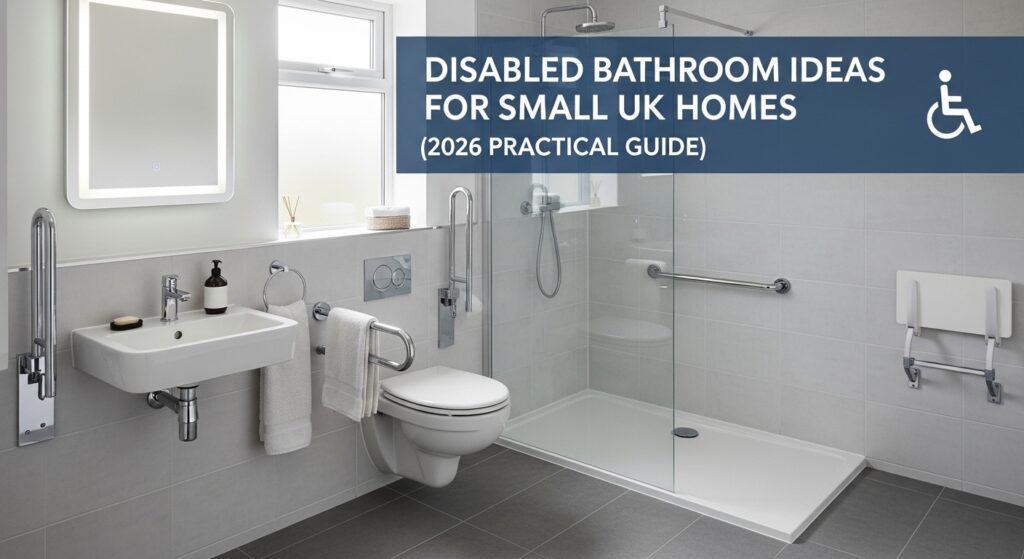
Small bathrooms are common in UK homes. Terraced houses, flats, and older properties often have limited space. When mobility becomes a concern, adapting a compact bathroom can feel overwhelming.
The good news is that even small bathrooms can be made safe, accessible, and practical with smart design choices.
This guide shares realistic, space-saving disabled bathroom ideas that work in typical UK homes.
Why Small Bathrooms Need Smart Planning
Limited space creates challenges such as:
- Narrow entry points
- Tight turning areas
- Limited wall space for rails
- Awkward plumbing layouts
Poor planning can make a bathroom feel cramped and unsafe.
Good planning improves:
- Accessibility
- Safety
- Comfort
- Long-term independence
1. Replace the Bath with a Level-Access Shower
In small bathrooms, a bathtub often takes up too much space.
Removing it and installing a level-access shower:
- Creates more floor space
- Removes stepping hazards
- Allows easier movement
A simple glass screen instead of a full enclosure keeps the room feeling open.
For wheelchair users, open-plan shower areas work best.
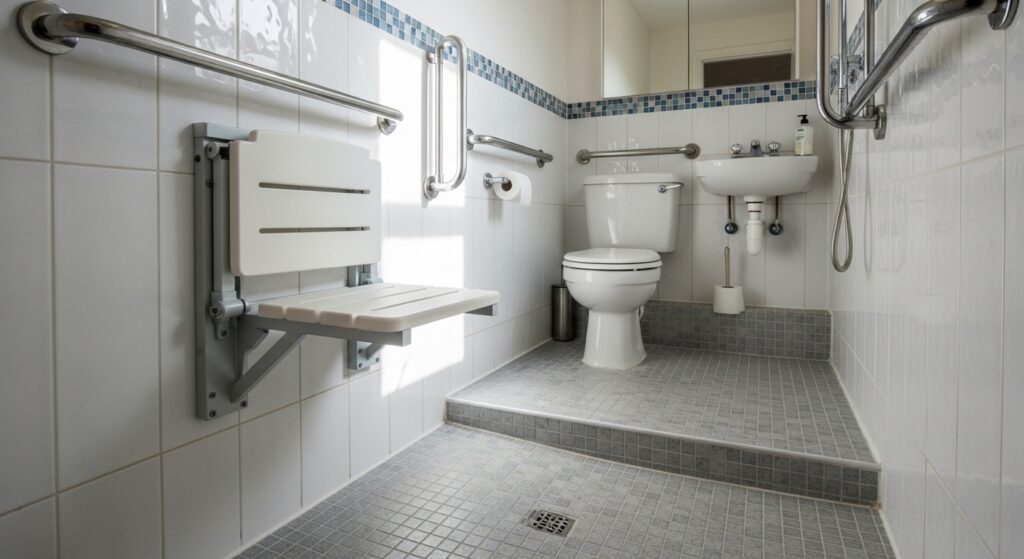
2. Use a Wall-Mounted Fold-Down Shower Seat
Permanent seating can block space in small bathrooms.
A fold-down shower seat:
- Provides support when needed
- Folds flat when not in use
- Saves valuable room
Pair it with a handheld shower head for flexibility.
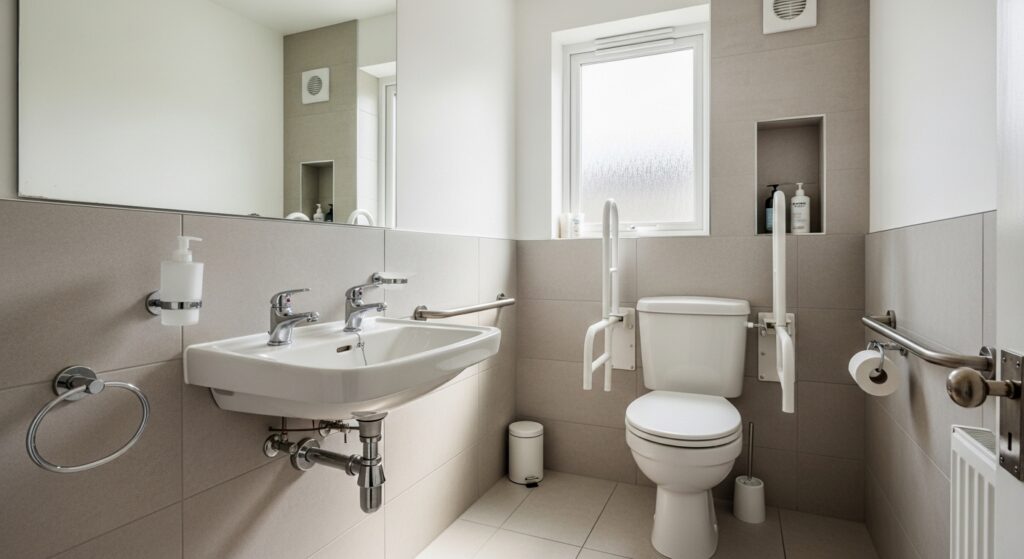
3. Install Slimline Grab Rails
Modern grab rails are available in compact designs that blend into small spaces.
Options include:
- Vertical rails near shower entry
- Short horizontal rails beside toilet
- Angled rails for natural grip
Choose textured or non-slip finishes for wet areas.
4. Choose a Compact Wall-Hung Sink
Wall-hung sinks free up floor space.
Benefits:
- Easier wheelchair access
- Cleaner visual space
- Room underneath for seated use
Avoid bulky pedestal sinks in tight layouts.
5. Install a Comfort-Height Toilet
Standard toilets can be too low for people with weak knees.
Comfort-height toilets:
- Make sitting and standing easier
- Reduce joint strain
- Improve safety
In very small bathrooms, compact projection models save space while maintaining height.
6. Use Non-Slip Flooring
In small bathrooms, one slip can lead to serious injury.
Choose:
- Textured vinyl
- Anti-slip tiles
- Wet room flooring
Avoid glossy finishes.
Safety matters more than appearance.
7. Improve Lighting
Poor lighting increases fall risk.
Install:
- Bright ceiling lights
- Mirror lighting
- Motion-sensor night lighting
Well-lit spaces feel larger and safer.
8. Consider a Sliding Door
Standard inward-opening doors take up space.
Sliding or pocket doors:
- Free up internal space
- Improve wheelchair access
- Reduce collision risk
This is especially helpful in narrow hallways.
9. Use Corner Fixtures
Corner sinks and corner toilets are designed for tight layouts.
They:
- Maximise unused space
- Improve movement flow
- Make small bathrooms more practical
They can make a significant difference in flats and older properties.
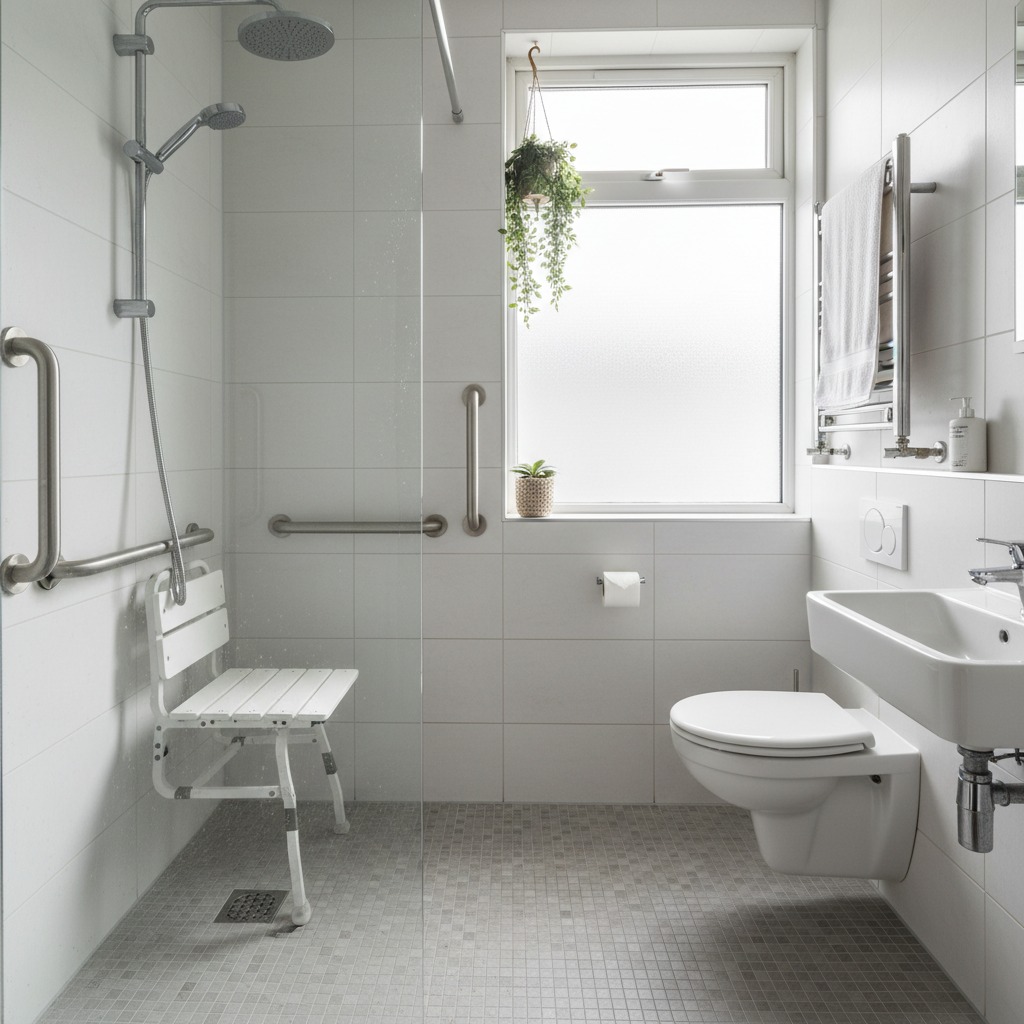
10. Install a Wet Room Design
For very small bathrooms, a full wet room can be ideal.
Benefits:
- No shower tray edges
- Seamless floor
- Easier cleaning
- More open feel
The entire room becomes waterproofed.
While more expensive, it works well in compact spaces.
11. Keep Storage Minimal and Smart
Clutter reduces safe movement.
Use:
- Wall-mounted cabinets
- Recessed shelves
- Slim mirrored units
Keep essential items within easy reach.
Avoid floor-standing storage in small rooms.
12. Use Colour to Increase Visibility
Contrast helps people with visual impairments.
Examples:
- Dark grab rail on light wall
- Contrasting toilet seat
- Defined shower area colour
This improves depth perception and safety.
How Much Does a Small Disabled Bathroom Conversion Cost?
Typical price ranges in the UK:
- Minor upgrades: £1,000 – £3,000
- Bath to shower conversion: £2,000 – £4,000
- Full small wet room conversion: £5,000 – £10,000
Costs depend on:
- Structural work
- Plumbing changes
- Tiling
- Accessibility features
Always get multiple quotes.
Can You Get Financial Help?
If adaptations are medically necessary, you may qualify for:
- Disabled Facilities Grant
- Local council minor adaptation support
An occupational therapist assessment is usually required.
Funding approval depends on eligibility and means testing.
Planning Tips Before Starting
Before committing:
- Measure your bathroom accurately
- Identify mobility challenges
- Think long-term, not short-term
- Consult a specialist installer
- Ask about VAT relief
Planning properly avoids costly redesign later.
Mistakes to Avoid in Small Accessible Bathrooms
- Overfilling the room with equipment
- Installing bulky rails
- Ignoring ventilation
- Using slippery tiles
- Not leaving enough transfer space
Balance safety with usability.
Is It Worth Converting a Small Bathroom?
Yes, if mobility issues are affecting safety.
A well-designed small accessible bathroom can:
- Prevent falls
- Improve independence
- Reduce carer strain
- Future-proof your home
Even minor changes can make daily routines easier.
Final Thoughts
Small bathrooms do not mean limited options.
With smart layout choices and the right accessibility features, even compact UK homes can have safe and functional disabled-friendly bathrooms.
The key is planning carefully, prioritising safety, and focusing on long-term needs rather than short-term cost.
Disclaimer
This article is for general informational purposes only and does not constitute construction or financial advice. Always consult qualified professionals before structural changes. FreedomMove may earn commission from affiliate links where applicable.