
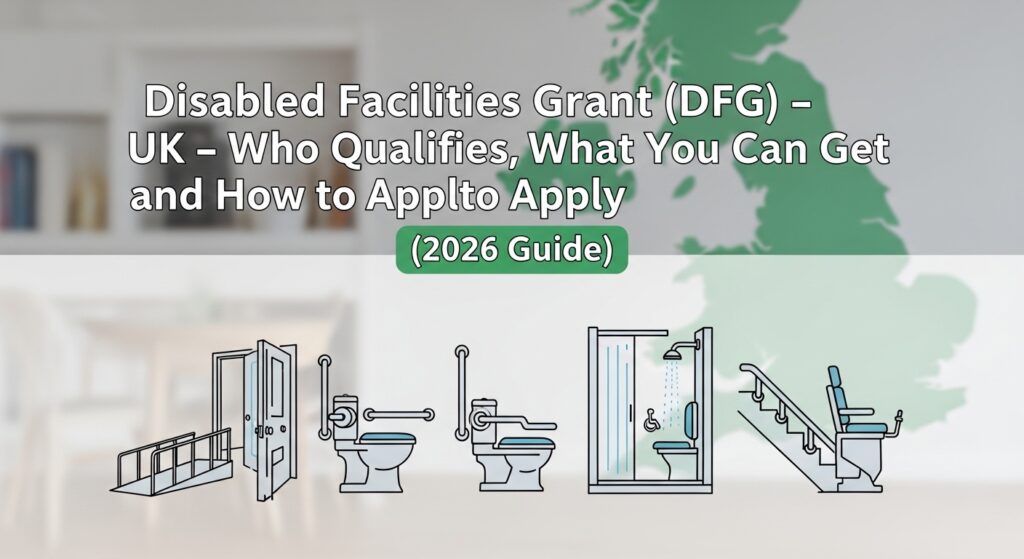
Adapting a home to meet disability needs can be expensive. Installing a stairlift, widening doorways, or building a level-access shower can cost thousands of pounds. Many families delay essential changes because they believe they cannot afford them.
The Disabled Facilities Grant (DFG) exists to help with exactly these costs.
This guide explains who qualifies, what type of work is covered, how much funding is available, and how to apply through your local council.
What Is the Disabled Facilities Grant?
The Disabled Facilities Grant is a government-backed scheme that helps disabled people pay for essential home adaptations.
It is available in:
- England
- Wales
- Northern Ireland
(Scotland operates a similar but separate system.)
The grant is managed by your local council, but funding comes from central government.
It is not a loan. In most cases, it does not need to be repaid.
What Is the Purpose of the DFG?
The goal of the DFG is to help disabled people:
- Live independently
- Move safely around their home
- Access essential rooms
- Reduce risk of injury
- Continue living in their property rather than moving into care
The focus is on necessary adaptations, not general home improvements.
Who Qualifies for a Disabled Facilities Grant?
You may qualify if:
- You are disabled
- You care for a disabled child
- You are a tenant or homeowner
- The property is your main residence
A disability can include:
- Physical impairments
- Learning disabilities
- Autism
- Mental health conditions
- Long-term health conditions
- Progressive illnesses
Children qualify under the same principle if adaptations are required.
Does It Matter If You Rent?
No.
You can apply if you:
- Own your home
- Rent privately
- Live in housing association property
- Live in council housing
If you rent, your landlord must usually give permission for adaptations.
What Type of Work Does the Grant Cover?
The DFG covers essential disability-related changes, such as:
- Installing stairlifts
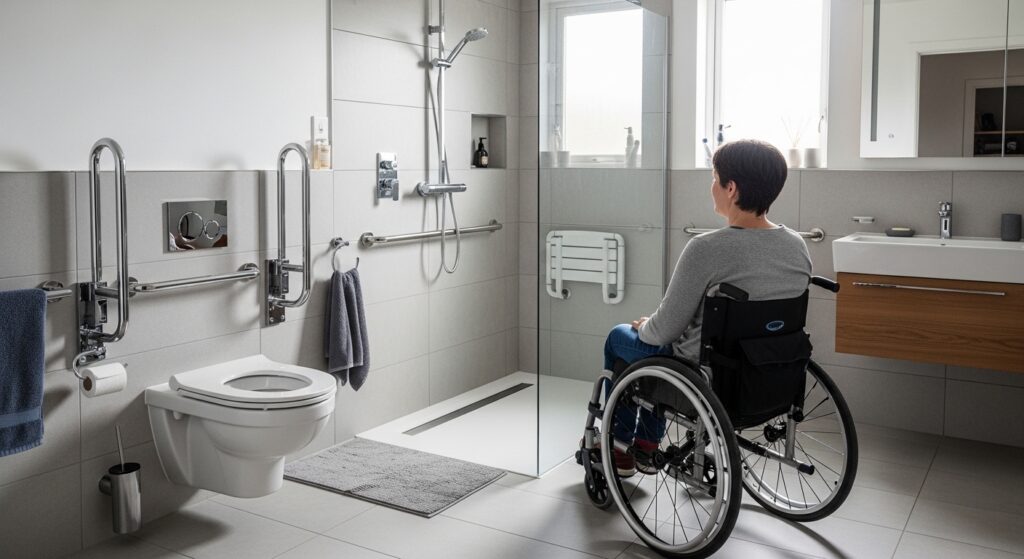
- Level-access showers
- Wet rooms
- Widening doors for wheelchair access
- Ramps and handrails
- Lowering kitchen worktops
- Adapting heating controls
- Improving access to bedrooms
- Installing ceiling track hoists
It does not cover:
- General home renovations
- Cosmetic upgrades
- Non-essential improvements
The adaptation must be necessary and appropriate for the disabled person’s needs.
How Much Can You Get?
Maximum grant amounts differ by region.
In England:
- Up to £30,000
In Wales:
- Up to £36,000
In Northern Ireland:
- Usually up to £25,000
The exact amount approved depends on:
- The work required
- Occupational therapist recommendations
- Financial assessment (if applicable)
For children, the grant is not means-tested in England.
Is the Disabled Facilities Grant Means-Tested?
For adults, yes.
A financial assessment looks at:
- Income
- Savings
- Partner income
- Certain benefits
However, some benefits may be disregarded.
If you receive means-tested benefits like Universal Credit, you may qualify for full funding.
For disabled children, the grant is usually not means-tested in England.
The Role of the Occupational Therapist
Before funding is approved, the council typically arranges an assessment by an occupational therapist (OT).
The OT will:
- Visit your home
- Assess mobility needs
- Recommend appropriate adaptations
- Decide what is necessary
The council will not approve work that is not supported by the OT assessment.
How to Apply for a DFG
Step 1: Contact your local council
Search online: “Disabled Facilities Grant” + your council name.
Step 2: Request an assessment
The council arranges an occupational therapy assessment.
Step 3: Financial assessment
If required, the council reviews income and savings.
Step 4: Submit formal application
This includes plans, quotes, and supporting documents.
Step 5: Approval and work begins
You must not usually start work before grant approval.

How Long Does It Take?
Processing times vary.
The assessment stage can take several weeks.
From formal application, councils generally aim to decide within six months.
Urgent cases, such as hospital discharge situations, may be prioritised.
Do You Have to Repay the Grant?
In most cases, no.
However, for larger grants over £5,000 in England:
- The council may place a local land charge
- If you sell within 10 years, part of the grant (above £5,000) may need to be repaid
- Repayment is capped at £10,000
Rules vary by region.
Can You Choose Your Own Contractor?
Usually, the council:
- Approves quotes
- May provide a list of contractors
- May manage the project
Some councils allow you to arrange your own contractor, but approval is required first.
Always confirm before signing agreements.
What If You Are Refused?
If your application is refused, you can:
- Ask for a written explanation
- Request a review
- Submit additional medical evidence
Sometimes refusals happen because the proposed work is not considered necessary rather than due to eligibility.
DFG and Other Support
The Disabled Facilities Grant works alongside other schemes, including:
- Council Tax Reduction
- Attendance Allowance
- Personal Independence Payment
- Carer’s Allowance
Receiving these benefits can strengthen your financial assessment position.
Common Mistakes to Avoid
- Starting work before approval
- Applying without OT assessment
- Assuming cosmetic changes qualify
- Not checking landlord permission
- Failing to explore additional local grants
Some councils offer top-up funding beyond the standard DFG.
Is It Worth Applying?
Absolutely.
Home adaptations:
- Reduce fall risk
- Improve independence
- Prevent hospital admissions
- Delay residential care
The financial value can be substantial, often covering tens of thousands of pounds.
For many families, it makes staying at home possible.
Final Thoughts
The Disabled Facilities Grant is one of the most practical forms of disability support in the UK. While the process can feel slow, the long-term benefit of safe, accessible living space is significant.
If mobility inside your home is becoming difficult, contact your local council and request an assessment. Even if you are unsure whether you qualify, it is worth asking.
Disclaimer
This article is for general informational purposes only. Grant rules, funding limits and council policies may change. Always check your local authority’s official guidance before making decisions. FreedomMove does not guarantee approval and is not affiliated with any local council.
Carer’s Allowance guide click the link below