
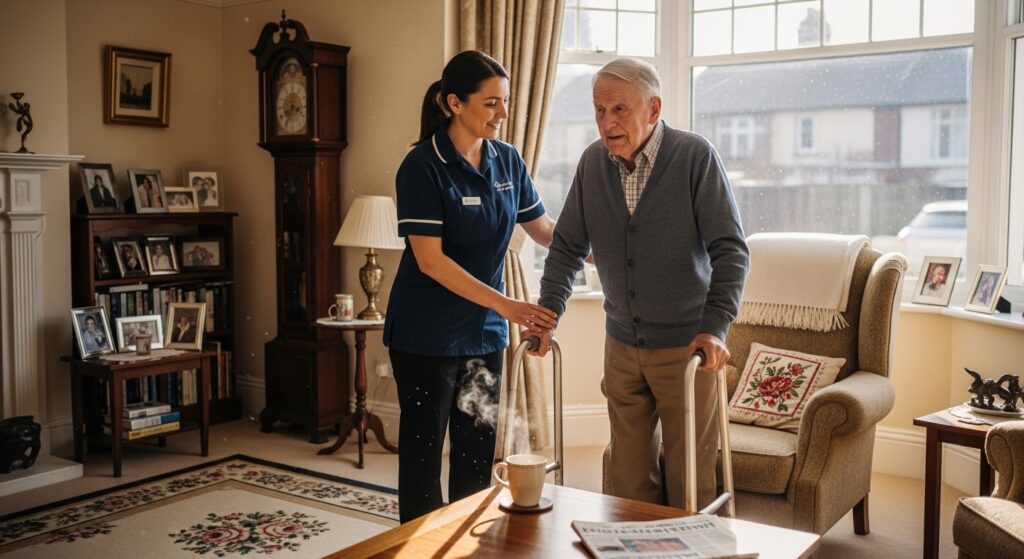
Home care support plays a crucial role in helping disabled individuals, elderly people, and those with long-term health conditions live independently in their own homes. Instead of moving into residential care facilities, many people in the UK prefer receiving assistance while staying in a familiar and comfortable environment.
In the United Kingdom, home care services are provided through a combination of local councils, private care providers, and government-funded support programs. However, understanding the eligibility criteria, costs involved, and application process can sometimes feel confusing.
This complete guide explains how to get home care support in the UK in 2026, including who qualifies, how assessments work, what services are available, and how much home care may cost.

What Is Home Care Support?
Home care support refers to services provided to individuals in their own homes to help them manage daily activities and maintain independence.
These services can be provided by professional caregivers, healthcare workers, or support assistants depending on the level of care required.
Home care services typically include:
- Assistance with personal care such as bathing and dressing
- Help with preparing meals
- Medication reminders
- Mobility support
- Household tasks like cleaning and laundry
- Companionship and emotional support
For many disabled or elderly individuals, home care provides a safe and practical way to continue living independently.
Who Can Get Home Care Support in the UK?
Home care services are generally available for individuals who need assistance due to health conditions, disabilities, or age-related limitations.
People who may qualify include:
- Disabled adults
- Elderly individuals who need help with daily activities
- People recovering from illness or surgery
- Individuals with long-term health conditions
- People with mental health challenges
Eligibility is usually determined through a care needs assessment conducted by the local council.
Care Needs Assessment in the UK
Before receiving home care support funded by the local council, individuals must undergo a care needs assessment.
This assessment determines the level of support required and whether the individual qualifies for assistance.
How the Assessment Works
The assessment is typically conducted by a trained social worker or healthcare professional.
During the assessment, they will evaluate:
- Daily living activities
- Physical health conditions
- Mental health and wellbeing
- Ability to perform household tasks
- Mobility and safety at home
The goal is to determine how much assistance the person needs in order to maintain independence and wellbeing.
Eligibility Criteria for Home Care Support
The UK uses a national eligibility framework to determine who qualifies for care support.
A person may be eligible if they:
- Have a physical or mental impairment
- Cannot perform essential daily activities independently
- Require support to maintain health and safety
- Would experience significant difficulties without assistance
If these criteria are met, the local council may provide financial support or arrange home care services.
Types of Home Care Services Available
Home care support in the UK can vary depending on individual needs.
Personal Care Support
Personal care includes help with essential daily tasks such as:
- Bathing or showering
- Dressing
- Grooming
- Toileting assistance
This type of support is commonly provided to elderly individuals and people with disabilities.
Household Assistance
Some individuals may require help with household tasks.
This support may include:
- Cleaning
- Laundry
- Shopping for groceries
- Preparing meals
These services help maintain a safe and comfortable living environment.

Medical and Healthcare Support
Some home care services involve medical support provided by trained professionals.
Examples include:
- Medication management
- Wound care
- Physiotherapy exercises
- Monitoring health conditions
These services are often arranged through NHS community healthcare teams.
Companionship and Social Support
Many home care providers also offer companionship services.
This may include:
- Social visits
- Support attending appointments
- Help with hobbies and activities
Companionship can improve emotional wellbeing and reduce loneliness.
How Much Does Home Care Cost in the UK?
Home care costs can vary depending on the level of support required and whether the services are funded by the local council or privately arranged.
Council-Funded Care
If an individual qualifies for council support, the local authority may cover part or all of the cost of care services.
However, a financial assessment (means test) is usually conducted to determine whether the person must contribute toward the cost.
Private Home Care Costs
If individuals arrange private care without council support, the costs can vary.
Average home care costs in the UK may range from:
- £15 to £30 per hour for standard care services
- Higher costs for specialist medical care
Some providers offer live-in care services, which may cost significantly more depending on the level of support required.

Financial Support for Home Care
Several government benefits may help individuals pay for home care services.
Personal Independence Payment (PIP)
PIP provides financial support for individuals with long-term disabilities or health conditions.
This benefit can help cover the cost of home care support.
Attendance Allowance
Attendance Allowance is available for individuals over State Pension age who require help with daily living tasks.
The benefit is designed to support people who need regular care or supervision.
Direct Payments
Local councils may also offer Direct Payments, which allow individuals to receive funds directly and choose their own care providers.
This option gives people greater control over the support they receive.
How to Apply for Home Care Support
Applying for home care support in the UK usually involves several steps.
Step 1: Contact Your Local Council
The first step is to contact your local council’s adult social care department.
You can request a care needs assessment, which is usually free of charge.
Step 2: Complete the Care Needs Assessment
A social worker or care professional will conduct the assessment to determine your eligibility for support.
This may involve:
- Home visits
- Interviews with the individual and family members
- Review of medical history
Step 3: Financial Assessment
If you qualify for care services, the council may conduct a financial assessment to determine how much you must contribute toward the cost.
Step 4: Care Plan Development
Once eligibility is confirmed, the council will create a care and support plan outlining the services you will receive.
This plan may include:
- Home care visits
- Personal care assistance
- Support with daily tasks
Benefits of Home Care Support
Home care offers several advantages compared to residential care.
Key benefits include:
- Independence and privacy
- Familiar home environment
- Personalized care plans
- Flexible support schedules
Many individuals prefer home care because it allows them to maintain control over their daily routines.
Tips for Choosing a Home Care Provider
When selecting a home care provider, it is important to consider several factors.
Check Care Quality Ratings
Care providers in the UK are regulated by the Care Quality Commission (CQC).
Always check the provider’s rating before choosing a service.
Ask About Staff Training
Professional caregivers should receive proper training and background checks.
This ensures high-quality and safe care.
Compare Costs and Services
Different providers offer different services and pricing structures.
Comparing options can help you find the best provider for your needs.
The Future of Home Care in the UK
Home care services continue to evolve as demand increases.
Future improvements may include:
- Greater investment in community healthcare
- Increased use of assistive technology
- Expanded support programs for disabled individuals
These developments aim to improve accessibility and quality of care across the UK.
Conclusion
Home care support provides an essential lifeline for disabled individuals, elderly residents, and people with long-term health conditions in the UK.
By offering assistance with daily activities, healthcare support, and companionship, home care services help people maintain independence and improve their quality of life.
Understanding the eligibility criteria, assessment process, and available financial support programs can make it easier to access the care services you need.
If you or a loved one require support at home, contacting your local council for a care needs assessment is the best first step toward receiving assistance.
Who qualifies for home care support in the UK?
Disabled individuals, elderly residents, and people with long-term health conditions may qualify for home care support after completing a care needs assessment.
Is home care free in the UK?
Home care may be free or partially funded by the local council depending on eligibility and financial circumstances.
How do I request home care support?
You can request a care needs assessment by contacting your local council’s adult social care department.
Can I choose my own home care provider?
Yes, through Direct Payments many individuals can choose their preferred care providers.