
Introduction
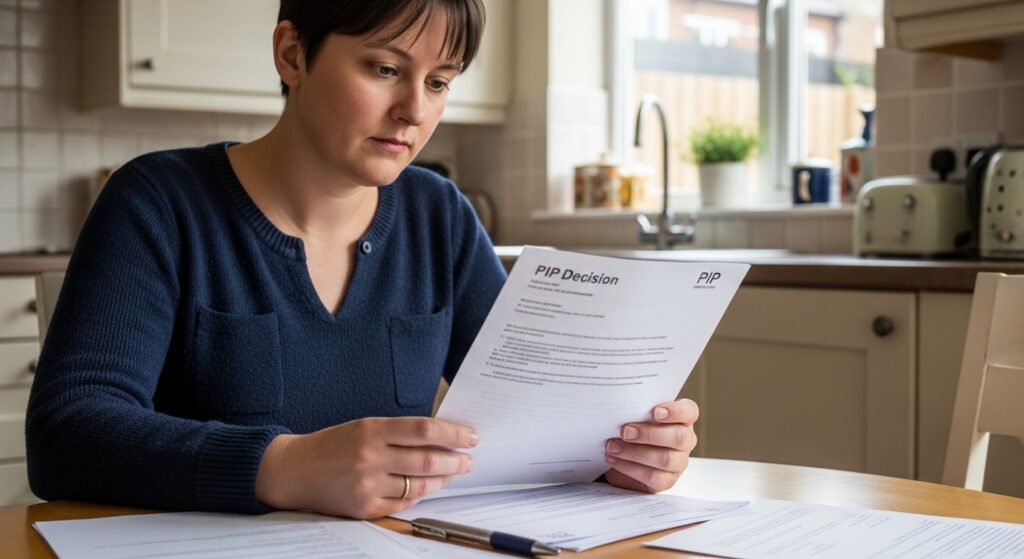
If your Personal Independence Payment (PIP) claim was refused or you were awarded a lower rate than expected, you are not alone. Many applicants challenge their decision successfully through a process called Mandatory Reconsideration (MR).
Mandatory Reconsideration is the first official step in appealing a PIP decision. Before you can take your case to an independent tribunal, you must ask the Department for Work and Pensions (DWP) to review their original decision.
This guide explains:
- What Mandatory Reconsideration is
- When and how to request it
- What evidence to include
- Common mistakes to avoid
- What happens next if the decision is not changed
It is written specifically for UK claimants in 2026 and based on official guidance.
Focus Keyword: Mandatory Reconsideration for PIP
Secondary Keywords: PIP appeal process UK, challenge PIP decision
What Is Mandatory Reconsideration?
Mandatory Reconsideration is when the DWP reviews your PIP decision again. A different decision maker looks at your case, including:
- Your original PIP form
- Assessment report
- Medical evidence
- Any new evidence you provide
It is not a full appeal. It is a review stage before a tribunal.
You must request Mandatory Reconsideration before you can appeal to a Social Security Tribunal.
Internal link suggestion: Link to your PIP Assessment Tips article here for readers who want to understand how decisions are made.
When Should You Request Mandatory Reconsideration?
You should request MR if:
- Your PIP claim was refused
- You were awarded the standard rate but believe you qualify for enhanced
- You received points that do not reflect your real limitations
- Important medical evidence was ignored
You must usually request MR within 1 month of the date on your decision letter.
If you are late, you can still apply up to 13 months after the decision, but you must give a valid reason (for example, illness or hospitalisation)
How to Request Mandatory Reconsideration
There are two main ways:
Option 1: By Phone
Call the number on your PIP decision letter.
Explain that you want to request a Mandatory Reconsideration.
However, it is strongly recommended to also confirm in writing.
Option 2: In Writing (Recommended)
Write a letter to the address on your decision letter. Clearly state:
- Your full name
- National Insurance number
- Date of decision
- That you are requesting Mandatory Reconsideration
- Why you believe the decision is incorrect
Keep a copy of everything you send.
Official reference: GOV.UK – Personal Independence Payment appeals guidance.
How to Write a Strong Mandatory Reconsideration Letter
This is where many people make mistakes. A strong MR letter should:
1. Focus on Descriptors and Points
PIP is based on a points system. You must explain:
- Which activity you disagree with
- How many points you believe you should receive
- Why
Example:
Instead of writing:
“I disagree with the decision.”
Write:
“For Activity 1 (Preparing Food), I was awarded 2 points. I believe I qualify for 4 points because I cannot safely prepare a meal without supervision due to risk of burns and fatigue.”
2. Use Real Examples
Give practical, detailed examples:
- What happened
- How often it happens
- What support you need
- What could go wrong
Example:
“On 12 March, I dropped a pan of boiling water due to hand weakness. My partner now supervises all cooking.”
3. Address the Assessment Report
If the assessor wrote something inaccurate, explain calmly and clearly why it is wrong.
Example:
“The report states I can walk 50 metres unaided. In reality, I use a walking stick and must stop after 20 metres due to severe pain.”
Stay factual. Avoid emotional or aggressive language.
Evidence That Strengthens Your Case
Strong evidence can significantly improve your chances.
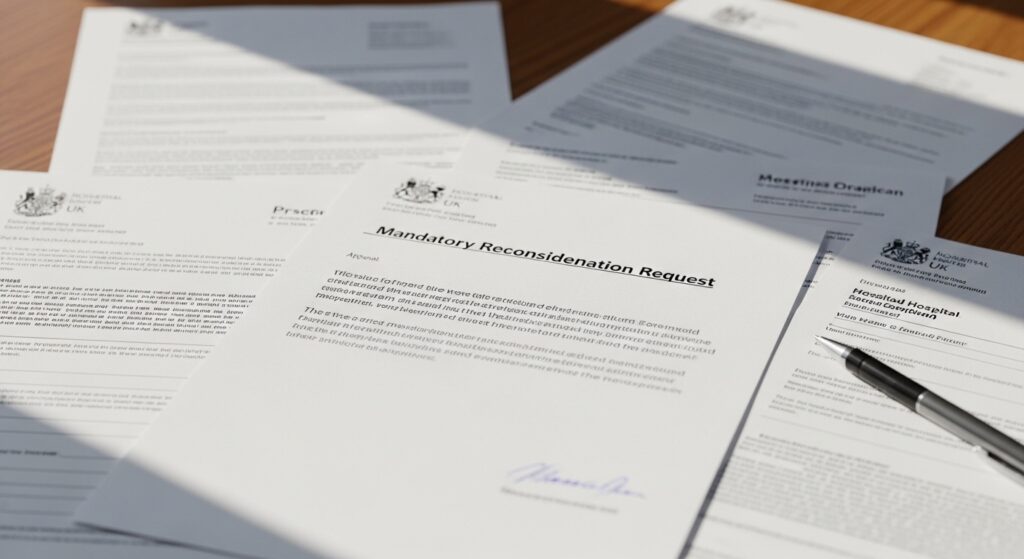
Useful evidence includes:
- GP letters
- Consultant reports
- Occupational therapist assessments
- Care plans
- Prescription lists
- Hospital discharge summaries
- A daily living diary
A short diary covering 7–14 days can be very powerful. It shows:
- Frequency of difficulties
- Fluctuating conditions
- Impact on daily life
Internal link suggestion: Link to your PIP Assessment Tips article for diary advice.
What Happens After You Submit MR?
The DWP will:
- Review your case
- Consider new evidence
- Issue a Mandatory Reconsideration Notice
This can take several weeks, sometimes longer depending on case volume.
The outcome will be:
- Decision unchanged
- Award increased
- Award reduced (rare but possible)
If the decision changes in your favour, payments are backdated.
What If Mandatory Reconsideration Is Unsuccessful?
If the decision does not change, you can appeal to an independent Social Security Tribunal.
You must appeal within 1 month of the MR Notice.
Tribunals are independent of the DWP and include:
- A judge
- A medical professional
- Sometimes a disability specialist
Many claimants are successful at tribunal, especially when they provide clear examples and updated medical evidence.
Internal link suggestion: Link to your upcoming or existing ESA vs Universal Credit article if relevant to broader benefit understanding.
Common Mistakes to Avoid
- Simply saying “I disagree” without explanation
- Not referring to specific activities and descriptors
- Sending no additional evidence
- Missing the 1-month deadline
- Writing emotional arguments instead of factual ones
Stay structured, calm, and evidence-based.
Real-Life Example
David, aged 52, has chronic back pain and depression. He was awarded only the standard daily living rate.
During Mandatory Reconsideration, he:
- Submitted a 10-day activity diary
- Provided a new GP letter
- Highlighted incorrect statements in the assessment report
- Explained risks of falls and medication side effects
His award was increased to enhanced daily living and enhanced mobility. Payments were backdated.
Preparation and detail made the difference.
Key Takeaways
- Mandatory Reconsideration is required before tribunal
- You usually have 1 month to request it
- Focus on points and descriptors
- Provide detailed examples
- Attach strong medical evidence
- Keep copies of everything
Challenging a decision can feel stressful, but many claimants succeed when they approach the process carefully and clearly.
Disclaimer
This article provides general guidance only and is based on official UK government procedures as of 2026. Always verify current rules and deadlines through GOV.UK or seek advice from a qualified benefits adviser. This content does not constitute legal or financial advice.