
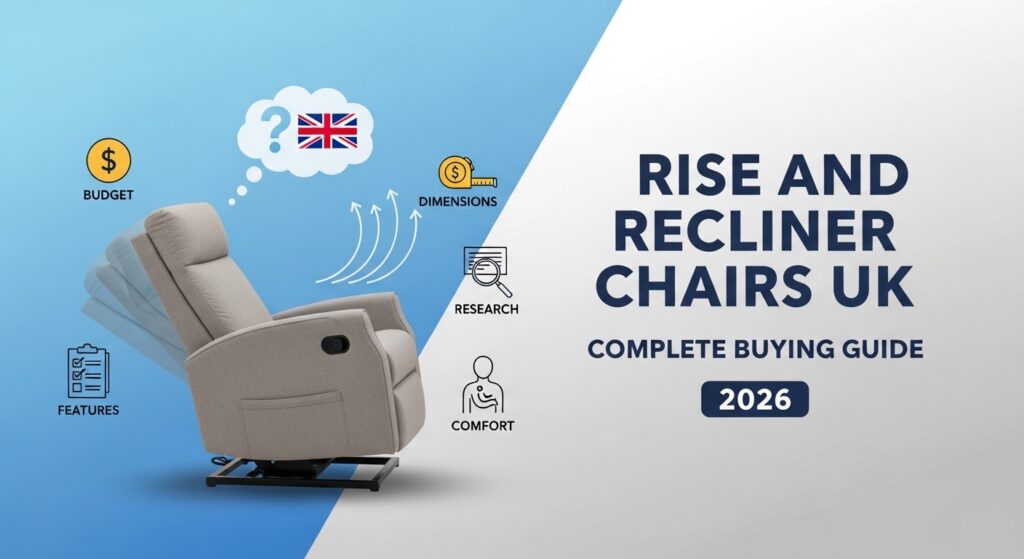
Getting in and out of a chair sounds simple until mobility becomes difficult. For many older adults and people with disabilities, standing up from a standard armchair can cause pain, instability, or even falls.
Rise and recliner chairs are designed to solve this problem. They gently lift you into a standing position and allow you to recline comfortably at the push of a button.
This guide explains how they work, who they are suitable for, what features matter most, and how to choose the right one.

What Is a Rise and Recliner Chair?
A rise and recliner chair is an electrically powered armchair that:
- Tilts forward to help you stand
- Reclines backward for comfort
- Supports posture and circulation
- Reduces strain on knees and hips
It operates using a handheld remote control.
Unlike standard recliners, rise and recliner chairs include a lifting mechanism that safely raises the seat.
Who Are They Suitable For?
These chairs are commonly used by:
- Elderly people with reduced strength
- Individuals with arthritis
- People recovering from surgery
- Those with Parkinson’s disease
- Stroke survivors
- People with chronic pain
- Anyone at risk of falling when standing
They are especially helpful for people who struggle to push themselves upright.
Types of Rise and Recliner Chairs
There are three main types.
1. Single Motor Chairs
Single motor chairs move the backrest and footrest together.
Pros:
- More affordable
- Simple controls
Cons:
- Less flexibility in positioning
Best for: Basic comfort and limited budgets.
2. Dual Motor Chairs
Dual motor chairs allow the backrest and footrest to move independently.
Pros:
- More adjustable
- Better for long sitting periods
- Greater comfort control
Cons:
- Slightly more expensive
Best for: People who spend many hours seated.
3. Tilt-in-Space Chairs
These maintain the body angle while tilting backward.
Pros:
- Excellent pressure relief
- Better for circulation
- Suitable for complex needs
Cons:
- Higher price
- Larger design
Best for: Users with significant mobility issues or pressure sore risk.

Key Features to Consider
Before buying, consider these factors carefully.
Seat Height
Feet should sit flat on the floor. Knees should be at a natural 90-degree angle.
Too low makes standing difficult. Too high reduces stability.
Seat Depth
You should be able to sit with your back fully supported while leaving a small gap between the seat edge and the back of your knees.
Incorrect depth can cause discomfort and poor posture.
Weight Capacity
Always check the maximum user weight. Bariatric models are available for higher weight limits.
Fabric and Upholstery
Options include:
- Fabric
- Leather
- Faux leather
- Waterproof materials
If continence issues are present, wipe-clean fabrics may be better.
Battery Backup
A battery backup system ensures the chair returns to upright during power cuts.
This is an important safety feature.
Head and Lumbar Support
Proper head and lower back support reduces strain and improves long-term comfort.
How Much Do Rise and Recliner Chairs Cost in the UK?
Prices vary depending on features and brand.
Typical price ranges:
- Basic single motor: £400 – £700
- Dual motor: £700 – £1,200
- Tilt-in-space or specialist chairs: £1,200 – £2,500+
Custom-built chairs cost more but provide better fit.
Can You Get Financial Help?
In some cases, yes.
Support may be available through:
- Disabled Facilities Grant (if part of wider adaptation)
- Local council equipment services
- Charitable grants
- NHS occupational therapy recommendations
Funding is not guaranteed, but worth exploring if the chair is medically necessary.
Are Rise and Recliner Chairs VAT Exempt?
If you are chronically sick or disabled, you may qualify for VAT exemption.
This means:
- You do not pay the 20% VAT
- You must complete a simple declaration form
- The supplier applies VAT relief at checkout
This can reduce cost significantly.
Safety Considerations
To reduce risks:
- Keep cables clear of walking areas
- Do not allow children to play with the controls
- Ensure the chair is placed against a wall with adequate space
- Follow manufacturer weight guidelines
Modern chairs include safety cut-off systems to prevent trapping hazards.
Do They Improve Health?
They can help by:
- Reducing joint strain
- Improving circulation when reclining
- Lowering fall risk
- Supporting recovery after surgery
- Reducing caregiver strain
They are not medical devices, but they provide meaningful support.

How to Choose the Right Model
Before purchasing:
- Measure available room space
- Measure your body dimensions
- Consider daily usage hours
- Test in person if possible
- Check warranty length
A 2–5 year warranty is standard for quality models.
Common Mistakes to Avoid
- Buying based on price alone
- Choosing the wrong seat height
- Ignoring weight capacity
- Not checking delivery access
- Forgetting VAT exemption eligibility
Fit is more important than brand name.
Should You Buy Online or In Store?
Online:
- Often cheaper
- Wider selection
In-store:
- Allows testing
- Professional advice
- Better fitting support
For complex needs, in-store fitting is recommended.
Are They Worth It?
For people who struggle to stand safely, yes.
The independence gained from being able to rise without assistance can:
- Improve confidence
- Reduce fall risk
- Reduce reliance on carers
- Improve overall comfort
Many users report immediate daily benefit.
Final Thoughts
A rise and recliner chair is not just about comfort. For many people, it restores independence and safety in the home.
Choosing the correct size and motor type makes a big difference. Take time to measure properly and consider long-term needs rather than short-term cost.
If mobility is declining, investing in the right chair can make everyday life easier and safer.
Disclaimer
This article is for general informational purposes only and does not constitute medical advice. Always consult a healthcare professional or occupational therapist before purchasing specialist equipment. Prices and VAT rules may change. FreedomMove may earn commission from affiliate links where applicable.
Link Below For more Information: