
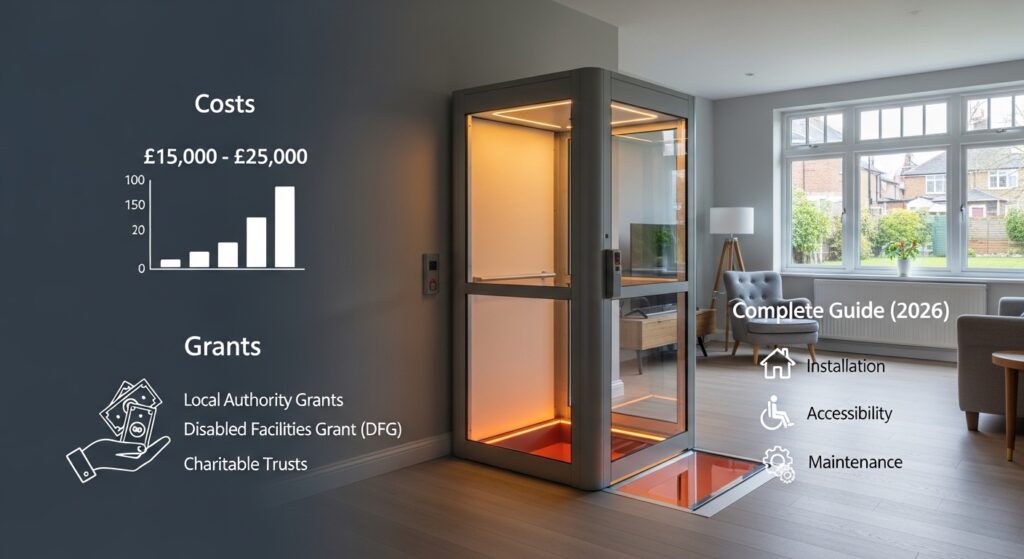
For homeowners with mobility challenges, stairs often create the biggest barrier to living independently. While stairlifts solve many problems, they aren’t suitable for everyone—especially in homes with multiple floors, narrow staircases, or tight corners.
A through-floor lift (TFL) can provide full vertical access between floors without the limitations of a traditional stairlift. This guide covers how TFLs work, costs in the UK, grants, and practical considerations.
What Is a Through-Floor Lift?
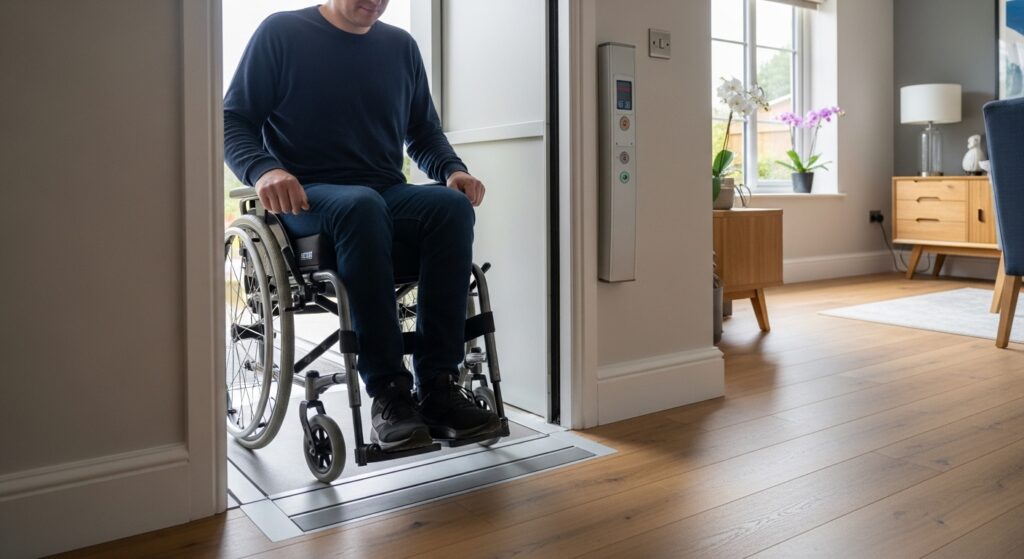
A through-floor lift is a vertical platform lift installed inside a home that carries a person and wheelchair (if needed) between floors.
Features include:
- Enclosed platform for wheelchair users
- Smooth vertical movement
- Safety sensors and alarms
- Manual and automatic doors
- Compact footprint
Unlike stairlifts, through-floor lifts do not follow a staircase—they go straight up, like a small residential elevator.
Who Should Consider a Through-Floor Lift?
Ideal for:
- Wheelchair users unable to transfer to a stairlift seat
- Homes with multiple floors and narrow staircases
- People with complex mobility needs
- Residents looking for long-term accessibility solutions
TFLs allow independent movement for individuals who may not safely use a stairlift.
How Much Does a Through-Floor Lift Cost in the UK?
Typical UK prices:
- Standard home lift: £8,000 – £15,000
- Wheelchair-friendly TFL: £12,000 – £20,000+
- Optional extras (enclosures, remote controls): £2,000 – £4,000
Cost factors:
- Floor-to-floor height
- Home structure modifications
- Power supply and electrical work
- Enclosure design and materials
Are There Grants Available for Through-Floor Lifts?
Disabled Facilities Grant (DFG)
Through-floor lifts are often eligible under DFG when deemed necessary by an occupational therapist.
- Maximum funding in England: £30,000
- Means-tested for adults
- Grants cover equipment, installation, and some home modifications
Local Council Funding
Some councils provide discretionary funding for urgent adaptations. Check your local authority website for availability.
Installation Process
- Initial Survey
- Conducted by manufacturer or council-approved contractor
- Measures floor-to-floor distance and available space
- Conducted by manufacturer or council-approved contractor
- Planning Approval
- Most TFL installations do not require planning permission
- Listed buildings may need consent
- Most TFL installations do not require planning permission
- Electrical and Structural Work
- Ensure sufficient power supply
- Modify flooring or create small platform recess if needed
- Ensure sufficient power supply
- Lift Installation
- Typically 1–3 days depending on complexity
- Safety inspection performed after installation
- Typically 1–3 days depending on complexity
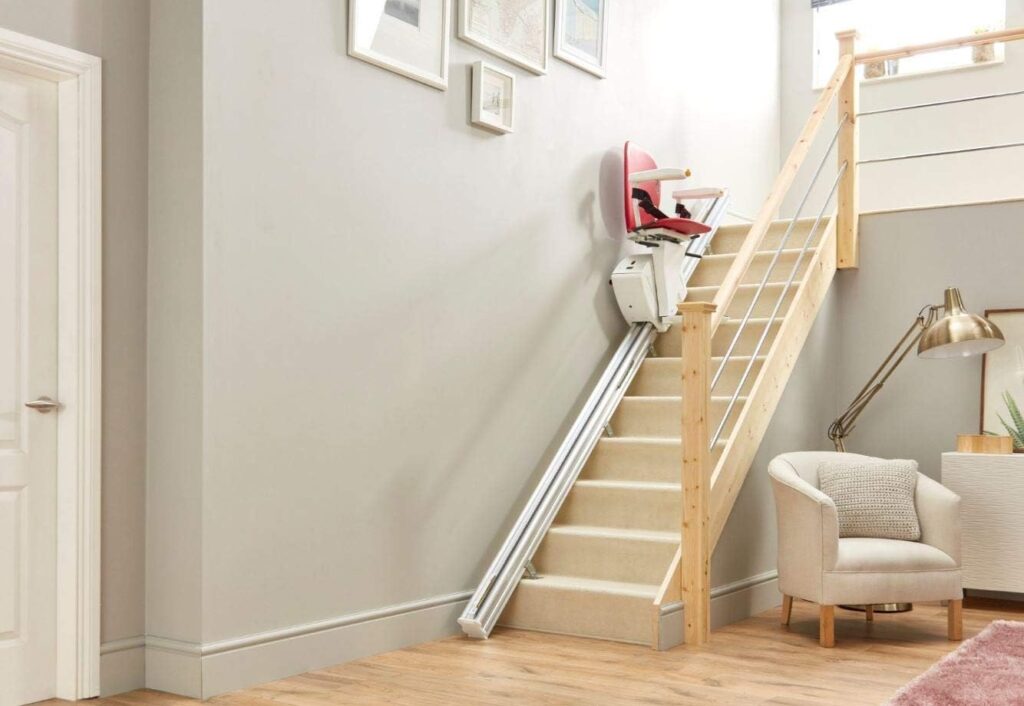
Safety Features
Modern through-floor lifts include:
- Obstacle detection sensors
- Automatic braking systems
- Emergency lowering
- Battery backup
- Lockable doors
Regular maintenance and servicing are essential to maintain safety.
Space Requirements
Most lifts require:
- Minimum internal dimensions: 1.2m x 1.2m for wheelchair accessibility
- Ceiling height varies by model, usually 2.2m+
- Floor space must be clear for platform entry and exit
A professional survey ensures suitability.
Pros and Cons
Pros
- Full wheelchair accessibility
- Safer than stairlifts for certain users
- Can increase property independence and safety
- Often eligible for grants
Cons
- Higher cost than stairlifts
- Structural work may be required
- Space requirements may limit options
Alternatives to Through-Floor Lifts
If a TFL is not feasible:
- Stairlifts (straight or curved)
- Home reconfiguration (bedroom/bathroom on the ground floor)
- Residential elevators (higher cost, requires major construction)
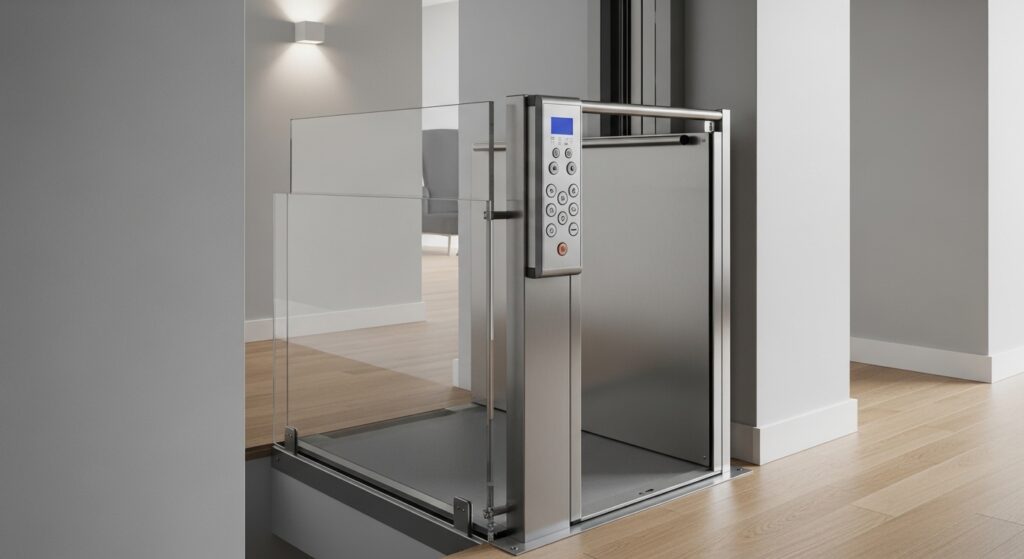
Maintenance and Servicing
- Annual safety inspection recommended
- Lubrication and electrical checks
- Manufacturer servicing contracts available
- Ensures long-term reliability and insurance compliance
Should You Install a Through-Floor Lift?
If your home’s stairs are impassable and you need wheelchair access, a TFL is often the most practical long-term solution.
It allows independent living, reduces carer strain, and may be grant-funded.
Final Thoughts
Through-floor lifts are a life-changing investment for people with severe mobility challenges.
Careful planning, professional assessment, and proper grant applications ensure the best outcome for safety, affordability, and independence.
Disclaimer
This article is for informational purposes only and does not constitute medical, legal, or financial advice. Always seek professional assessment before installation. FreedomMove may earn commission from affiliate links where applicable.