
Introduction
The Universal Credit (UC) disability element is an additional payment for claimants who have limited capability for work due to long-term illness or disability. It is designed to support individuals in covering extra costs related to disability, such as mobility aids, home adaptations, or care assistance.
Understanding eligibility, claim process, and payment amounts can be confusing. This guide explains everything you need to know about the Universal Credit disability element in the UK in 2026, with step-by-step instructions, examples, and tips to ensure a smooth application.
Who Qualifies for the Disability Element?
To receive the UC disability element, you must meet specific criteria:
- Limited Capability for Work (LCW):
You must have a health condition or disability that limits your ability to work. - Limited Capability for Work-Related Activity (LCWRA):
For higher payments, you must meet the LCWRA criteria. This means you are severely limited in your ability to work and require support in daily life or cannot prepare for work. - Age Requirement:
You must be 16 or over. - Universal Credit Claim:
You must already be receiving Universal Credit. The disability element is added on top of your standard UC payment.
Example:
Sarah, aged 30, has multiple sclerosis. She struggles with daily tasks and cannot attend regular work. She qualifies for UC and the disability element due to her LCWRA status.
Official Reference: GOV.UK – Universal Credit Disability Element

Payment Amounts (2026)
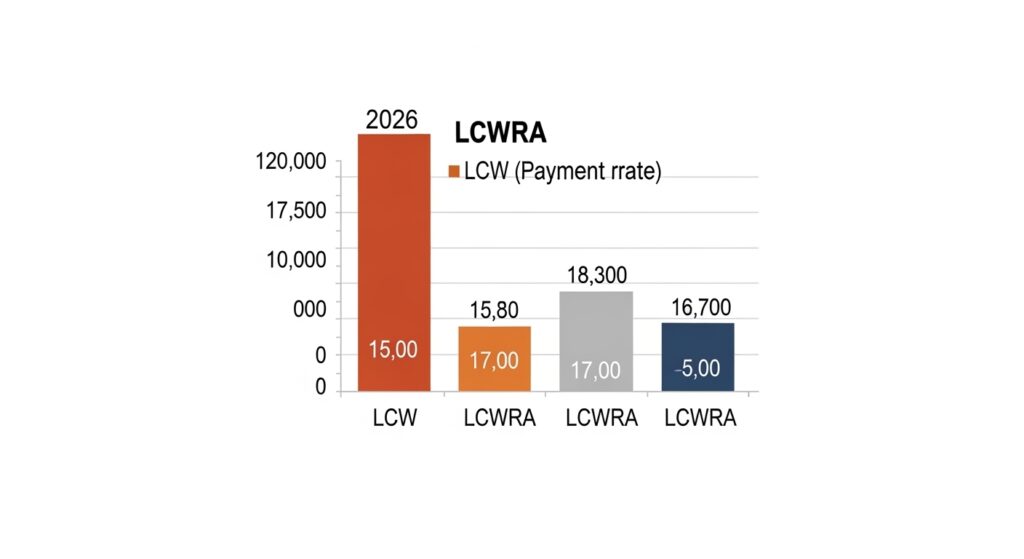
The Universal Credit disability element has two levels, depending on the severity of your disability:
| Element Type | Weekly Amount | Notes |
|---|---|---|
| Standard Disability Element | £169.20 | For those with LCW only |
| Enhanced / LCWRA Element | £338.10 | For those with LCWRA; higher payment reflects greater support needs |
Tip: Receiving Attendance Allowance or PIP may also affect eligibility or interact with UC claims. Check your Attendance Allowance guide or PIP guide for details.
How to Claim the Disability Element
Step 1: Make a Universal Credit Claim
- Apply online through the official Universal Credit portal
- Provide your personal details, bank account info, and evidence of income
Step 2: Complete the Health Assessment (If Required)
- DWP may schedule a Work Capability Assessment (WCA)
- Assessment determines whether you qualify for LCW or LCWRA
- Be honest and detailed about daily limitations, mobility issues, and care needs
Tip: Bring any supporting medical evidence, including GP letters or hospital reports.
Step 3: Wait for DWP Decision
- Decisions typically take 6–12 weeks
- You will receive a letter detailing:
- Your Universal Credit payment
- Whether the disability element is included
- LCW or LCWRA status
Common Mistakes to Avoid
- Not providing detailed examples of daily challenges
- Missing supporting medical evidence
- Incorrectly assuming all disabilities automatically qualify for LCWRA
- Forgetting to update DWP about changes in health or circumstances
Correcting these mistakes early increases chances of approval and prevents delays.
Interaction With Other Benefits
Receiving the UC disability element may affect or complement other benefits:
- Attendance Allowance / PIP: Helps with care costs; can increase UC support
- Carer’s Allowance: Family members providing care may qualify
- Motability Scheme: If also receiving PIP, you may lease a vehicle
Tips for a Strong Claim
- Document Daily Life: Keep a diary of tasks you cannot perform
- Provide Detailed Medical Evidence: Include GP notes, hospital reports, and specialist assessments
- Highlight Safety Concerns: Explain if you require supervision to prevent accidents
- Update Regularly: Notify DWP of any changes in health status
Example:
James, aged 45, has severe arthritis. He submitted a detailed diary of his daily struggles with dressing, cooking, and using public transport. His LCWRA claim was approved, securing the enhanced disability element.
Appeals and Mandatory Reconsideration
If your claim is refused:
- Request a mandatory reconsideration within 1 month of the decision
- Provide additional evidence
- If still refused, appeal to a Social Security Tribunal
Real-life experience shows that many claims are overturned at the mandatory reconsideration stage with proper evidence and documentation.
Summary
The Universal Credit disability element provides essential support for disabled people who cannot work due to health reasons.
- Two levels of payment depending on LCW or LCWRA status
- Requires detailed documentation and sometimes a medical assessment
- Interacts with other benefits like PIP, Attendance Allowance, and Carer’s Allowance
- Following step-by-step guidance increases the chance of approval
This benefit ensures that individuals facing disability challenges have financial support to cover extra costs, helping maintain independence and quality of life.
Disclaimer
Disclaimer:
This article provides general guidance only. All information is based on official UK government sources as of 2026. Always verify eligibility, rates, and procedures via GOV.UK. This guide does not constitute legal, financial, or medical advice.