
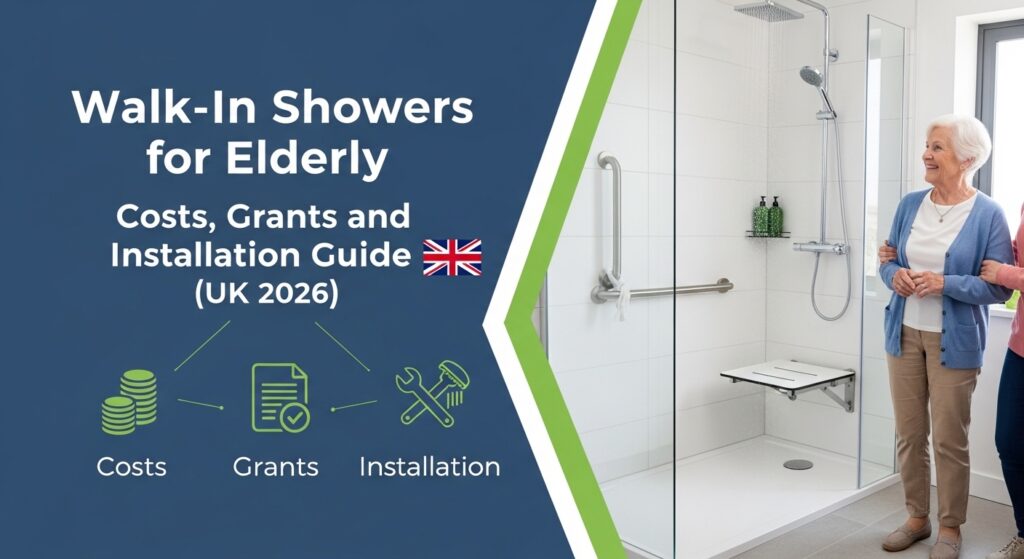
Bathrooms are one of the most dangerous rooms in the home. Slippery surfaces, high bath edges, and limited space increase the risk of serious falls.
For elderly people and individuals with reduced mobility, stepping over a bathtub can become unsafe. A walk-in shower removes that barrier and creates a safer, more accessible washing space.
This guide explains costs, installation options, grants available in the UK, and whether a walk-in shower is worth it.
What Is a Walk-In Shower?
A walk-in shower is a level-access or low-threshold shower designed to allow easy entry without climbing over a bath.
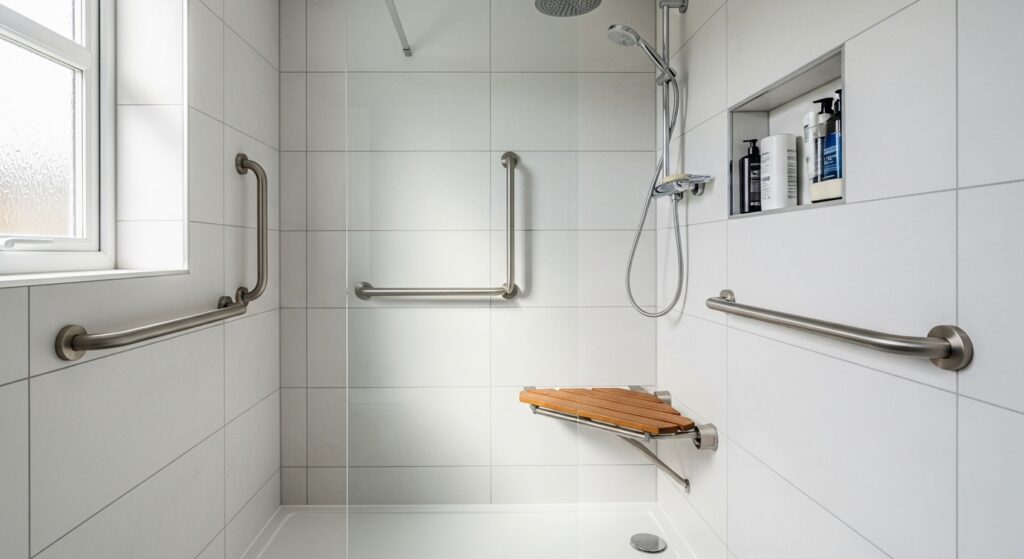
It may include:
- Low or zero step entry
- Slip-resistant flooring
- Grab rails
- Built-in seating
- Handheld shower head
- Glass screen or half enclosure
Some are full wet rooms. Others are adapted shower trays installed in place of a bathtub.
Who Should Consider a Walk-In Shower?
They are particularly useful for:
- Elderly homeowners
- Disabled adults
- Wheelchair users
- People recovering from surgery
- Individuals with arthritis or joint pain
- Anyone with balance problems
If stepping into a bath feels unstable, it may be time to consider adapting the space.
Types of Walk-In Shower Options
1. Low-Threshold Shower Tray
A shallow tray replaces your bathtub.
Best for:
- Mild mobility issues
- Faster installation
- Lower budget projects
Pros:
- Less disruptive
- Cheaper than full wet room
Cons:
- Still has small step
2. Level-Access Shower
Floor is fully level with the rest of the bathroom.
Best for:
- Wheelchair users
- Significant mobility limitations
- Long-term accessibility
Pros:
- No step
- Safer
- Future-proof
Cons:
- More expensive
- Requires structural adjustment
3. Full Wet Room Conversion
Entire bathroom floor is waterproofed.
Best for:
- Major renovations
- Long-term independent living
- High accessibility needs
Pros:
- Maximum accessibility
- Modern design
- Easy cleaning
Cons:
- Highest cost
- Longer installation time
How Much Does a Walk-In Shower Cost in the UK?
Costs vary depending on the scale of work.
Typical price ranges:
- Basic bath-to-shower conversion: £2,000 – £4,000
- Level-access shower installation: £4,000 – £7,000
- Full wet room conversion: £7,000 – £12,000+
Factors that affect cost:
- Plumbing adjustments
- Floor reinforcement
- Tiling
- Drainage changes
- Electrical work
- Location in the UK
Always request detailed quotes from qualified installers.
Can You Get Help Paying for It?
Yes, in many cases.
Disabled Facilities Grant (DFG)
If you or someone in your household has a disability, you may qualify for a Disabled Facilities Grant.
In England:
- Up to £30,000 may be available
- Means-tested for adults
- Not means-tested for disabled children
The grant can cover:
- Removing a bath
- Installing a level-access shower
- Adding grab rails
- Improving bathroom accessibility
Applications are made through your local council.
Council Minor Adaptations
Some local authorities fund smaller bathroom changes without full DFG applications.
This may include:
- Grab rails
- Shower seats
- Small adjustments
It depends on your council and assessment outcome.
What Is the Application Process Like?
Typically:
- Contact your local council
- Request an occupational therapy assessment
- Assessment identifies required adaptations
- Formal grant application submitted
- Approval and contractor arrangements
Processing times vary. Some applications take several months.
Apply early if mobility is declining.
How Long Does Installation Take?
Approximate timeframes:
- Basic conversion: 2 to 5 days
- Level-access installation: 5 to 10 days
- Full wet room: 1 to 3 weeks
Times depend on structural changes required.
Are Walk-In Showers Safer?
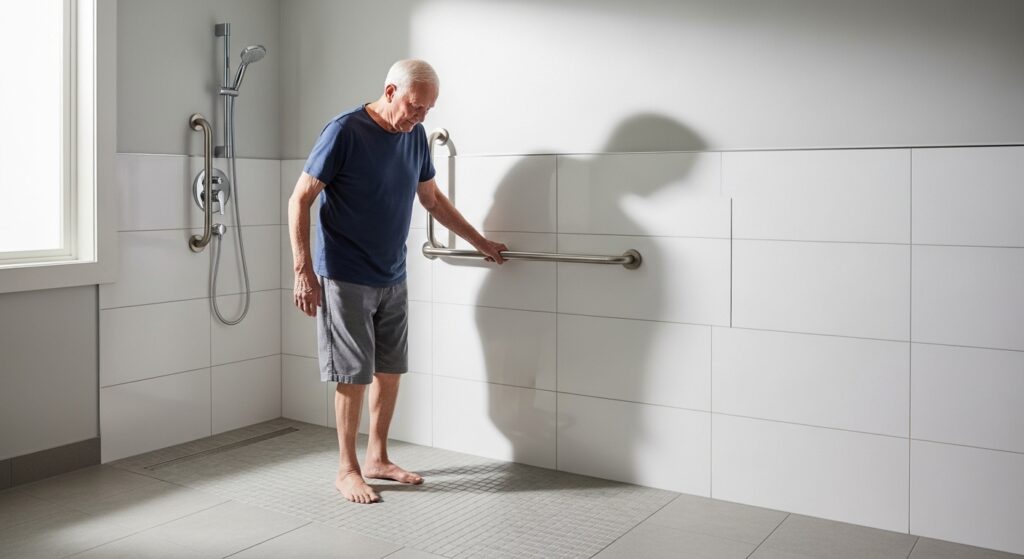
They significantly reduce risk by:
- Removing bath step
- Providing stable entry
- Allowing seated washing
- Improving drainage
- Supporting grab rail installation
However, safety also depends on:
- Non-slip flooring
- Proper drainage
- Correct rail placement
- Adequate lighting
Do They Add Value to a Property?
In some cases, yes.
For homes targeted at:
- Older buyers
- Disabled residents
- Long-term accessibility planning
However, removing the only bathtub in a family home may reduce appeal to buyers with young children.
Consider property type before permanent removal.
Common Mistakes to Avoid
- Hiring unqualified installers
- Not waterproofing properly
- Ignoring ventilation
- Choosing slippery tiles
- Skipping professional assessment
Bathroom adaptations must meet safety standards.
Should You Use a Specialist Company?
Specialist mobility bathroom companies understand:
- Accessibility regulations
- Drainage slope requirements
- Correct seating height
- Safe grab rail installation
While general builders may be cheaper, accessibility experience matters.
VAT Relief
If the installation is for a disabled person, certain building works may qualify for VAT relief.
This depends on:
- Type of adaptation
- Eligibility status
- Contractor compliance
Always confirm VAT rules before signing contracts.
Alternatives to Full Conversion
If budget is limited, consider:
- Bath lift seat
- Bath board
- Shower chair
- Grab rails
- Non-slip bath mats
These are lower cost but may not solve long-term access problems.
Is It Worth It?
If mobility is declining and bathing feels unsafe, a walk-in shower can be life-changing.
It:
- Reduces fall risk
- Supports independence
- Makes daily hygiene easier
- Reduces carer strain
- Future-proofs your home
For many elderly homeowners, it becomes one of the most valuable adaptations.
Final Thoughts
Bathroom safety should not be ignored until a fall happens.
If stepping into a bath feels unstable, consider exploring your options early. Grants may be available, and early planning reduces stress later.
A well-designed walk-in shower supports independence, dignity, and safer living at home.
Disclaimer
This article is for general informational purposes only and does not constitute financial, legal, or construction advice. Always consult qualified professionals before making structural modifications. FreedomMove may earn commission from affiliate links where applicable.